Steven Seidenberg on Absence, Impermanence and the Language of Space
Steven Seidenberg
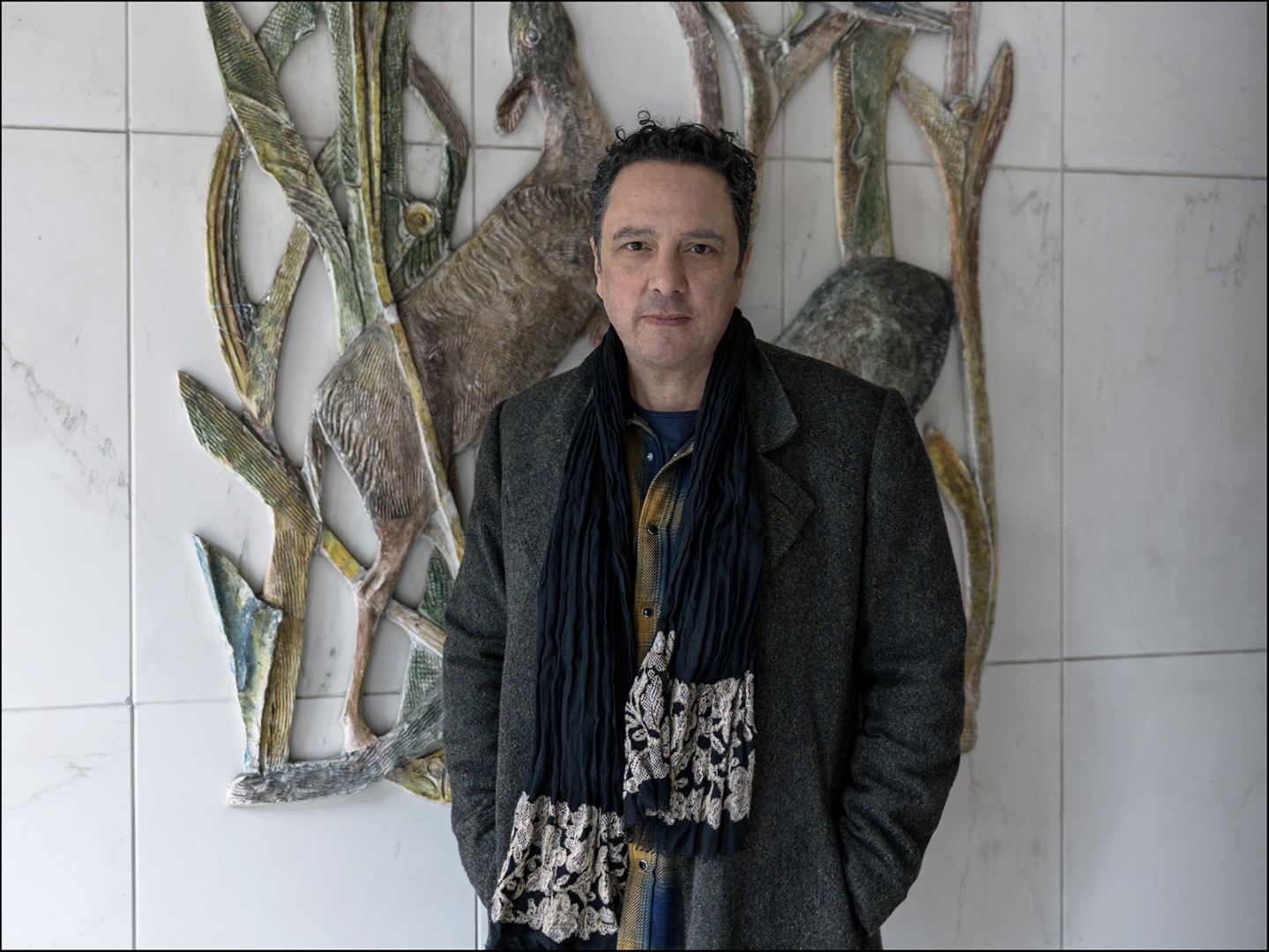
Steven Seidenberg approaches photography as a philosophical and poetic inquiry, where absence, transience and material traces converge within the frame.
In a conversation with FAULT, the artist reflects on the conceptual foundations behind his practice, from documenting the shifting conditions of lived environments to his deliberate avoidance of the human figure. Anchored by his current exhibition Home Truth: Image-making in Absence, Seidenberg’s work interrogates what remains when presence recedes – inviting viewers into spaces shaped as much by what is missing as by what endures.
FAULT: As an artist, poet, and philosopher, how do poetry and philosophy show up in the way you think about photography?
Steven Seidenberg: My photographic work is at least in part a conceptual practice, and the interrogation of the relationship of the work to the broader scope of its indexical implications is always prefatory to determining if the project meets the criteria for pursuit. This is, in other words, a practice that gives as much priority to broad thematic imperatives as compositional concerns, and that conceptual framework constitutes a philosophical residue that carries from image to image and project to project. At the same time, the photograph has an intrinsic affinity with the poem through the universalization of objectified contingency within its static field, akin to phonology and syntax in the poem—a condensation across the compositional plain that relies on a figurative metonymy as its mode of making meaning in the frame.
What led you to focus on documenting abandoned spaces in your photography?
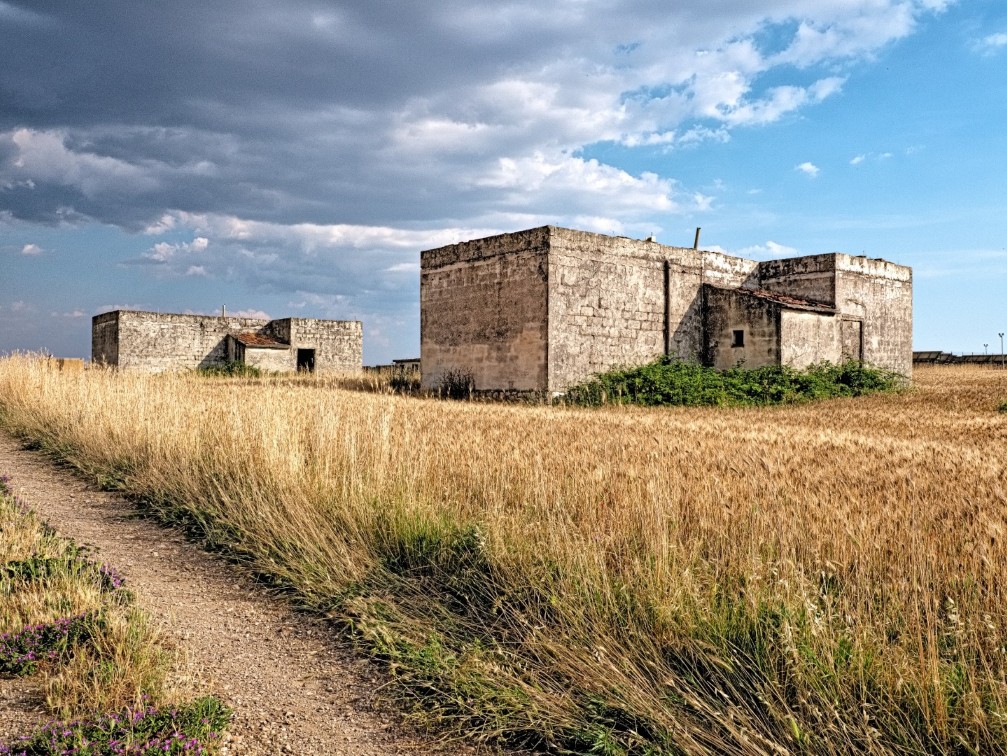
I really don’t focus on abandoned spaces, but sometimes it may appear as if I do; rather, I make a point of training my practice on the transitory—which may indeed include some expository emphasis on abandonment here and there—revealing the character of any circumstance as just and only that, despite our often tragically delusional attempts to deny that constitutive impermanence. In fact, I have only one series that takes for its subject presently abandoned buildings—The Architecture of Silence (with a book of the same title), which images the structures of a post WWII land reform movement in Southern Italy (the Riforma Fondiaria) that proved unsustainable for its ostensive beneficiaries, along with the vestiges of those who passed through the program and its related infrastructure, and recent reoccupations of the same. Other series may appear to emphasize abandonment by virtue of my avoidance of the human figure in my work, this for reasons both philosophical and compositional––in circumvention of various modes of objectification, both in pursuit of a phenomenological empathy rather than a merely conceptual sympathy, as it were, and in order to expand the compositional possibilities of the practice, which is always attenuated when a human form is present in the frame.
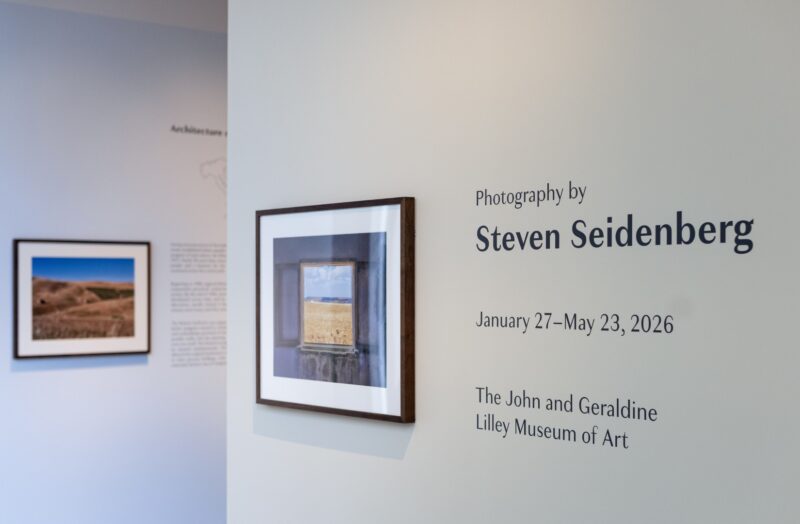
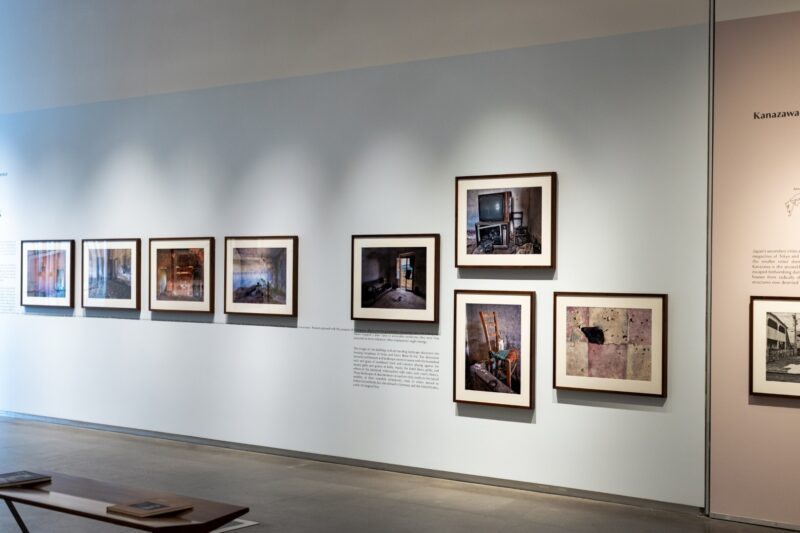
Can you tell us about your solo exhibition Home Truth: Image-making in Absence?
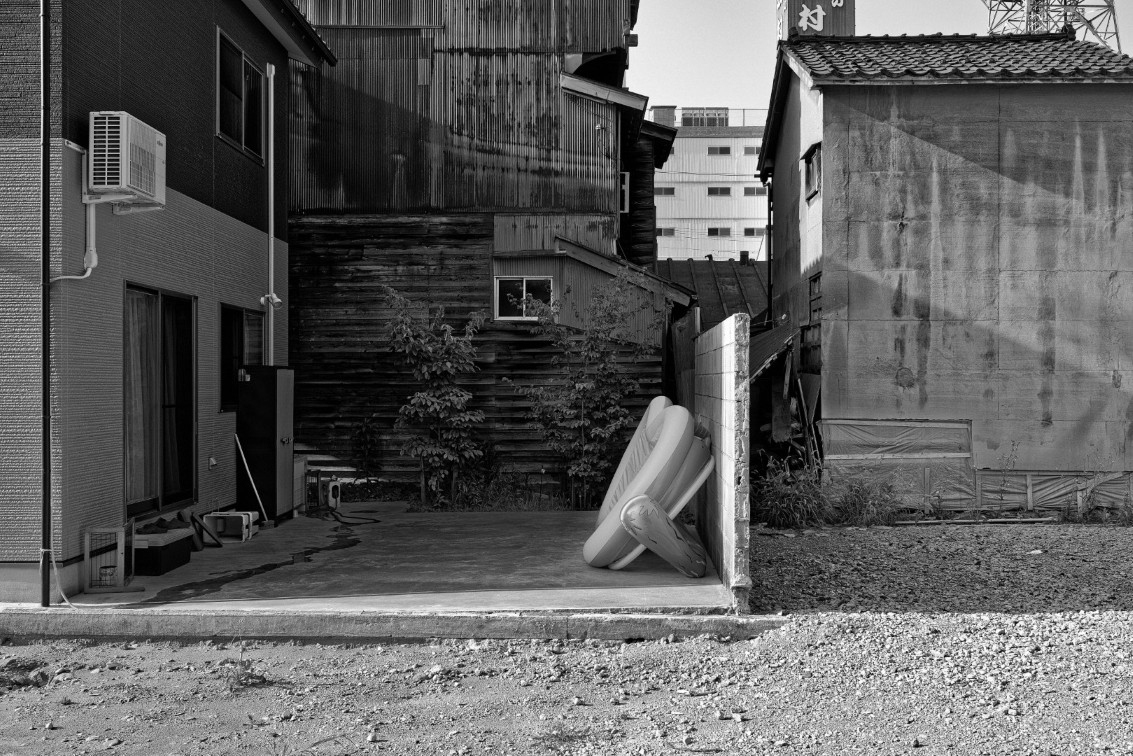
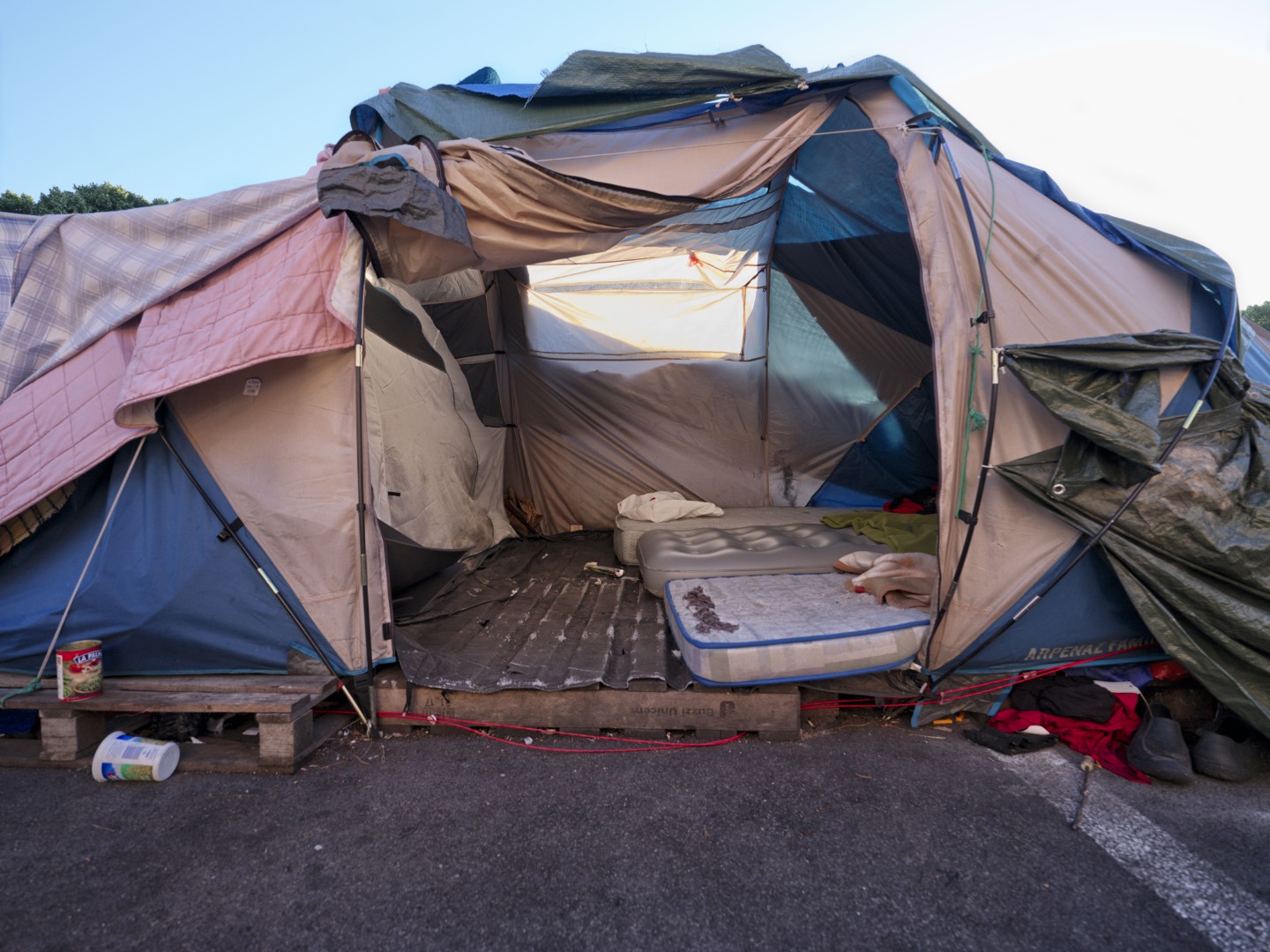
Home Truth consists of 10 large scale images each from three bodies of work (30 total)––the aforementioned Architecture of Silence, my series Kanazawa Vacancy, which images vacant lots in the city of Kanazawa, Japan, and Baobab: Migrant Tent City, a series focused on the domestic spaces of those inhabiting a tent city behind Tiburtina station in Rome. It’s on display at the Lilley Museum in Reno, Nevada through May 30th.
What brings the three bodies of work together, and did you always envision them as one unified exhibition?
Essentially, these series exemplify my explorations of the domestic landscape along various material, conceptual, and aesthetic lines, and though I didn’t envision them as intrinsically connected in their formation, I think all of my work shares a certain relationship to the material conditions I seek to document, as well as a conceptual posture expressed through both the construction of the series and the compositional constraints that characterize my particular voice. Which is to say that, while any of my bodies of work could be (and many have been) shown exclusively, I also hope the showing of any of my series with any other engenders fruitful lines of inquiry, each in its own way an encapsulation of the cultural and personal uncertainties of contemporary material circumstances, as traces of the absent or the soon to be absented just the same.
How do you approach photographing empty spaces, and what challenges come with it?
There are a number of senses of emptiness that concern my practice; from a compositional perspective, space is never empty, only negative––contrasted to the sense of visual clutter that characterizes some other portion of the frame. From a semantic view, emptiness is suggested by the absence of some expected or common element, even where compositional negativity is not apparent—thus the absence of the human figure in imaging domestic circumstances reads as an emptiness that I hope allows the viewer to more closely consider other semantic and composition elements of the piece. This is indeed an active practice, often requiring me to do the emptying, by exclusion or patience, a challenge of variable difficulty depending on the series. In spaces presently occupied (as with Baobab or my series in squatted buildings), the permissions required to access the spaces already give opportunity to explain my need for the occupants to be out of the space. But with series focused on spaces with large numbers of people moving through (as with Pipevalve Berlin, a series of ‘portraits’ of a particular drainage pipe cleanout valve in Friedrichshain, or Tokyo Tape, which uses the remnants of adhesive tape on the floors of the Tokyo subway system as the forms of a compositional abstraction, or Rome Squares, consisting of images of an external access point for utility conduits in Italian construction) the process is more arduous, or involves considerably more challenges of timing and restraint.
From your experience, what material traces do people leave behind in these environments, and what stories do they tell?
It depends on the length of time the space has been abandoned, and whether or not there is an intention to return. In The Architecture of Silence, many of the houses routinely contain large furniture, like sofas and mattresses and tables, decayed—even largely dissolved—by many decades of exposure, but less often one finds personal items, clothing and shoes, toys and books. Even school notebooks and the like. Such traces rarely tell us much about the particular personalities of the residents, but more connect us to the general patterns of living that we are often enacting ourselves—and in this way they serve as conduits for us to enter the space as empathic peers of a kind.
How do the places in Italy and Japan compare in terms of what they reveal about lived space, and what connects them on a more universal level?
In many ways my work in Japan and Italy focuses on such dramatically different environments and with such divergent criteria that there is little basis for this sort of comparison. What I can say is that any retreat of human inhabitation, in the city or countryside, in the aftermath of domestic or industrial enterprise, surrenders with surprising alacrity to the non-human world, endlessly subverting the structural coherence of all forms of planning and construction.
What ethical considerations do you think about when photographing transient or makeshift living spaces, such as the migrant tent city in Rome?
The first imperative is also precondition to the making of the work—that I refuse to picture any of the people in the space, in deference to their fear of having their images shown on social media and in other public places, or exploited for political purposes, often by actors on the right. Given my proclivities and my body of work, this is easily demonstrated, but there is a need to establish trust before beginning the project in earnest, and to establish full consent by making the nature of the project and its eventual outlets known from the start.
When viewers encounter these spaces in the exhibition, what do you hope they notice?
It’s different for different series, of course, and what the viewer is able to glean from my framing of abandoned spaces is not what they can access by empathic entrance into spaces adapted for present habitation. Ideally that empathy will find emphasis by virtue of my mode of composition and serial presentation, and the work will serve as aesthetic, emotional and political polemic in support of public policy and private engagement with these communities and those who live in them.
What is your FAULT?
My exaltation of the pleasures of confusing, exceeded only by the rarefied ecstasis of being confused.