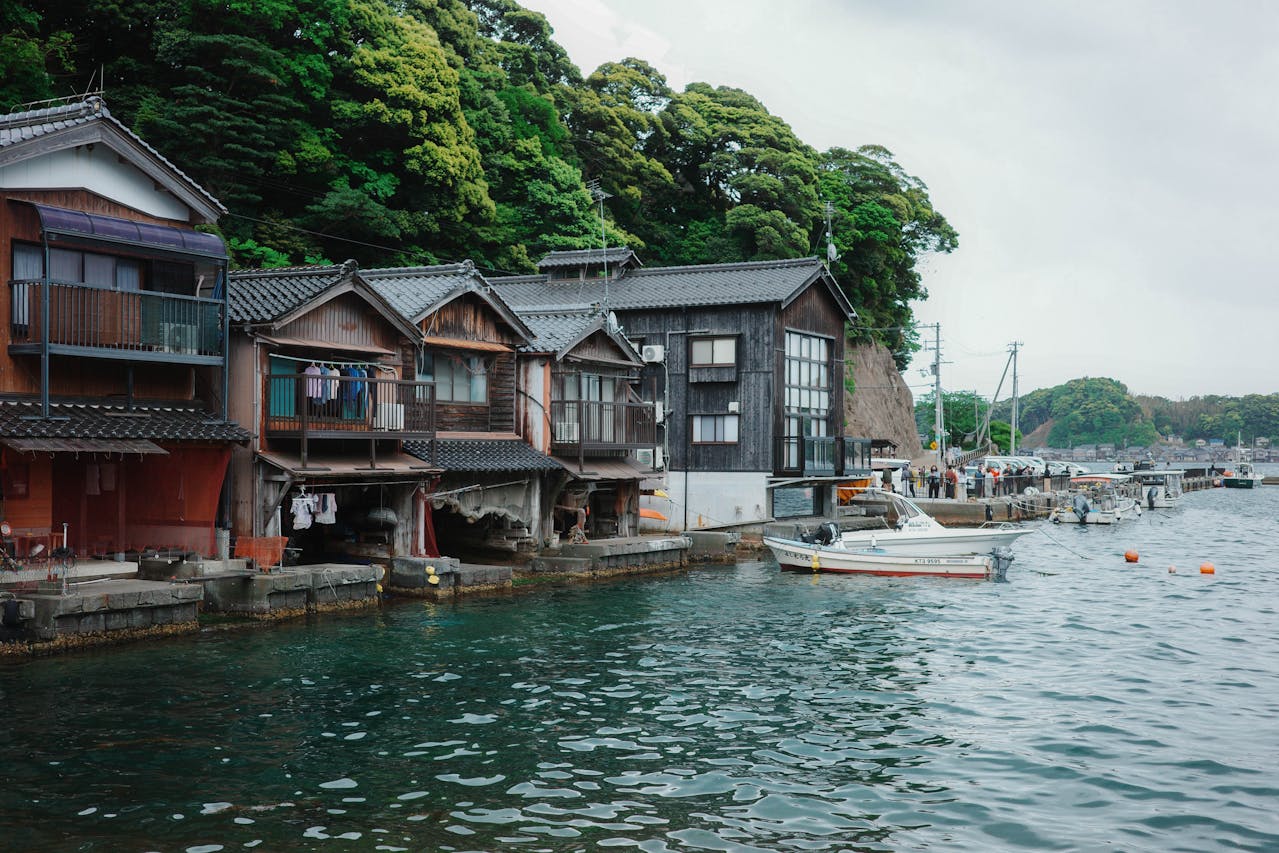
Most first trips to Japan begin in Tokyo, where everything feels fast, crowded, and in constant motion. Yet it doesn’t take long to reach places that feel far removed from that pace. A short train journey can bring you to quiet temple districts, coastal towns where fishing boats line the harbour, or mountain areas where the air is noticeably cooler. These parts of Japan aren’t hidden, but they’re often overlooked.
This guide looks beyond Tokyo, focusing on places where daily life moves at a slower pace and where time is best spent noticing the smaller details.
Exploring Japan’s Hidden Coastlines by Small Ship
Japan’s coastline extends well beyond the familiar bays of Tokyo and Osaka. In smaller ports, fishing boats still outnumber ferries, and daily life remains closely tied to the sea. The Seto Inland Sea is a good place to begin. Its islands, scattered between Honshu and Shikoku, are home to quiet harbours, cycling routes, and small museums, particularly around Naoshima and Teshima. Further north, the Sanriku Coast offers a more rugged setting, with steep cliffs and fishing towns that continue to rebuild and adapt following past tsunamis.
One of the best ways to experience these areas is through great small ship cruises in Japan, which follow routes that larger vessels can’t reach. These itineraries often include lesser-known ports such as Tomonoura, a well-preserved harbour town in Hiroshima Prefecture, or Sakaiminato, known for its seafood markets and waterfront streets lined with local shops. The smaller scale of these ships means you can step straight into town centres, with morning markets, local eateries, and coastal paths all within easy walking distance of the dock.
Time spent along these coastlines often revolves around simple details. Early morning fish auctions, quiet shrines facing the water, and narrow streets where houses open directly onto the harbour. In places like Ine in Kyoto Prefecture, traditional “funaya” boat houses sit right on the water’s edge, with wooden doors opening straight onto the bay.
Finding Peace in the Traditional Gardens of Kyoto
Kyoto draws visitors year-round, but it still holds quieter corners if you know where to look. The well-known temples around Higashiyama can get busy, especially along streets like Sannenzaka and Ninenzaka. A short walk away, smaller temple gardens offer a more settled environment, where visitors tend to spend longer sitting and observing.
Places like Shoren-in Temple, just off the main road near Maruyama Park, often go overlooked. The garden here includes moss-covered ground, a pond framed by low trees, and a simple wooden hall where visitors can sit on tatami mats and look out over the space.
Further north, the Philosopher’s Path follows a canal lined with cherry trees, but just off the path are temples such as Honen-in, where the entrance is marked by sand mounds and a quiet gate that feels removed from the nearby foot traffic.
Ryoan-ji, known for its rock garden, is another place where time seems to slow. Visitors sit along a wooden platform, facing a carefully arranged group of stones set in raked gravel. There’s nothing to do, yet people often stay longer than expected, noticing how the composition shifts subtly as they change position.
Even within central Kyoto, areas like Nishiki Market provide contrast. Covered walkways filled with food stalls and small vendors create a more active environment, but stepping out onto nearby streets such as Teramachi-dori brings things back to a quieter level.
Taking a Relaxing Break in a Natural Forest Onsen
Hot spring towns across Japan offer a completely different setting from the cities, especially those surrounded by forest. Places like Kurokawa Onsen in Kyushu or Nyuto Onsen in Akita Prefecture are known for their outdoor baths, often set along rivers or tucked into wooded areas. The experience here is shaped as much by the surroundings as by the water itself.
In Hakone, which sits within reach of Tokyo, forest onsen are easy to access but still feel separate from the city. Areas around Gora and Sengokuhara are known for ryokan stays, where rooms open onto small gardens or wooded views. Guests move between indoor baths and outdoor pools, where the sound of water and wind through the trees tends to dominate. The baths vary in temperature and mineral content, with some known for milky-white water and others for clearer, iron-rich springs.
Further north, Nyuto Onsen feels more remote. The baths here are spread across several ryokan, connected by forest paths and quiet roads. Tsurunoyu, one of the oldest, has mixed outdoor baths where visitors sit in open-air pools surrounded by trees and wooden buildings. Snow builds up in winter, and the contrast between the cold air and hot water becomes part of the experience.
Sampling World-Class Cuisine in the Heart of Osaka
Osaka’s reputation for food becomes clear as soon as you arrive. In central districts like Namba and Shinsaibashi, food stalls fill the streets at almost any hour. Areas such as Dotonbori are known for their bright signage and canal-side walkways, but the real appeal lies in the sheer variety of food available within just a few blocks.
Kuromon Ichiba Market is a good place to start. The covered arcade runs for several hundred metres, with stalls selling fresh seafood, grilled skewers, and seasonal fruit. Locals shop here as much as visitors, especially in the morning. Further south, Shinsekai has a different feel, with older streets and small eateries serving dishes like kushikatsu, where skewered ingredients are fried and served with dipping sauce.
Umeda, on the northern side of the city, offers a different perspective. Department store basements, known as “depachika”, are lined with prepared food, from neatly arranged bento boxes to carefully made desserts. Close to Osaka Station, narrow alleys are packed with small dining spots, many of which specialise in a single dish, giving the area a more focused, local feel.
Why Slow Travel is the Best Way to See Japan
Japan is best experienced at a slower pace. Travellers who move quickly between major cities often miss the smaller details that give each area its character. Staying longer in one neighbourhood allows time to notice daily routines, from early morning deliveries along quiet streets to evening walks, when locals stop at small shops on their way home.
In Kyoto, that might mean returning to the same stretch of the Philosopher’s Path at different times of day, when the light and atmosphere change. In coastal towns like Onomichi, it could involve walking up narrow hillside paths lined with temples, then sitting at a lookout point above the harbour. Even in Osaka, time spent exploring backstreets off Shinsaibashi-suji reveals places that don’t appear in guidebooks.
Transport makes it easy to move around, but there’s value in staying put for a while. Local trains, short walks, and unplanned stops often lead to the most memorable moments. Japan’s appeal isn’t limited to its major landmarks. It comes through in everyday details, and those only become clear when there’s time to notice them.
Are you ready to discover the quieter, more authentic side of Japan away from the usual tourist crowds?
Looking past Tokyo opens up a side of Japan that feels more tied to place. Fishing harbours, garden spaces, and neighbourhood food scenes each offer something distinct, shaped by local habits and surroundings. These experiences don’t rely on major landmarks or packed itineraries. They come from spending time in specific areas and noticing how things work day to day. For travellers who are willing to slow down and look a little closer, Japan offers far more than its most photographed spots.