Friqtao on Letting Go, Vulnerability, and Piano as Storytelling
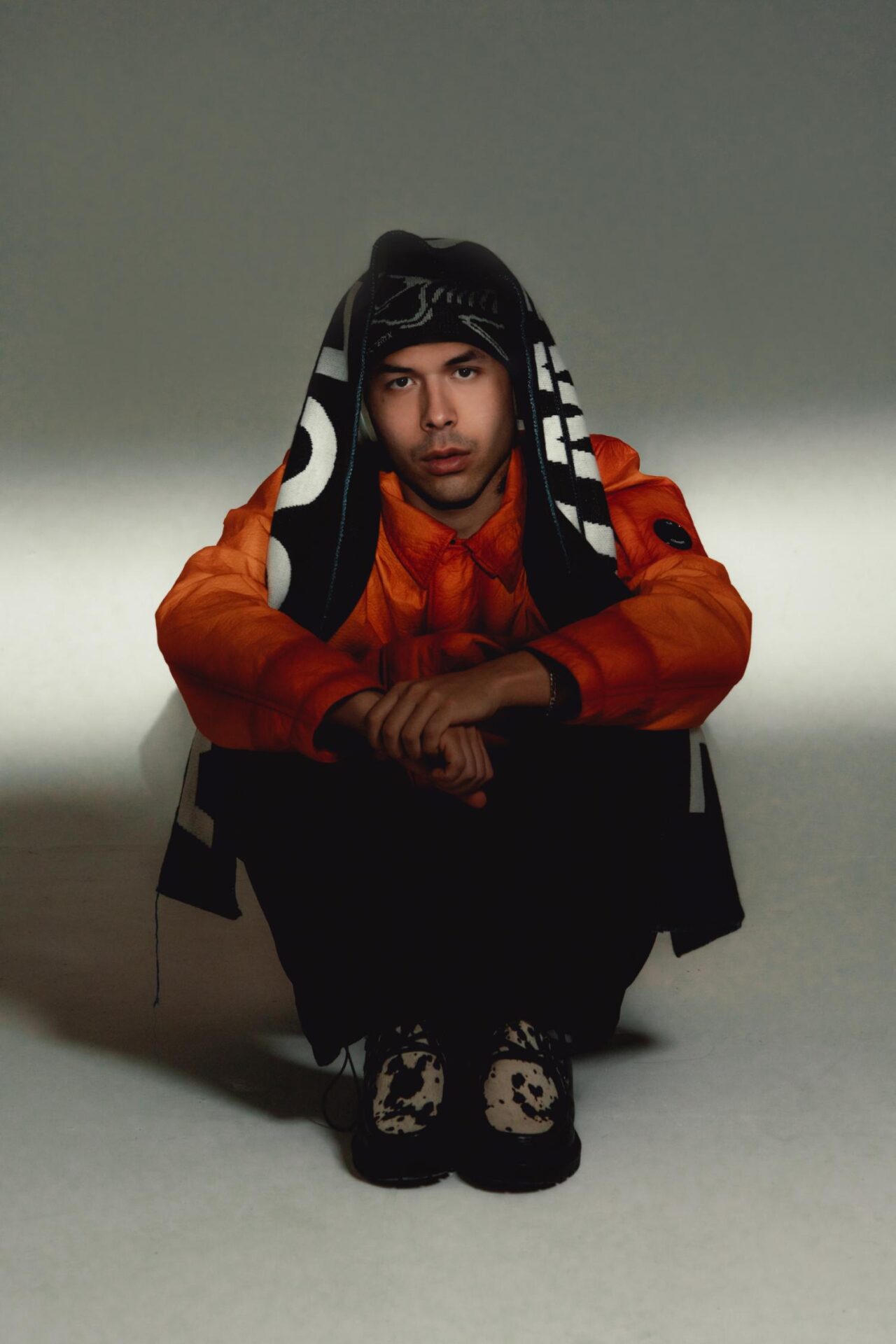
Photography: Jack Alexander
Stylist: Aga Dziedzic
Paris-born Friqtao has spent the past few years turning public spaces into something quietly sacred. From train station pianos to viral moments online, his performances have introduced a new generation to the emotional immediacy of instrumental music. With his debut EP Lifestream, Friqtao stepped beyond the fleeting scroll of social media and into a more expansive world one shaped by memory, vulnerability, reflection and FAULTs.
FAULT Magazine: What does your writing process look like when working on a new project?
Friqtao: I don’t really have a set process when I’m working on something new, inspiration can come from anywhere. Sometimes a track begins with a childhood memory, other times it might be sparked by a film character or a place I’ve visited. Often, I’ll record myself humming a melody on my phone and return to it later at the piano.
Friqtao: For me, the key is simply sitting with myself, checking in with the things that have caught my attention, and reflecting on how they make me feel. When an idea emerges, I try to shape it into a melody, and if it feels ready, I’ll include it in the project. It’s less about having a formula and more about following emotions and ideas that resonate.
FAULT Magazine: Lifestream is described as a journey through emotion, how do you know when a piece is finished emotionally, even if it could technically keep evolving?
Friqtao: I know a piece is emotionally finished when it simply feels right, not when I force it to sound finished. My focus is always on how the music makes me feel, and once that feeling is fully there, I know it’s ready. Of course, a piece could always keep evolving, but if I let that thought take over, it would never feel complete. For me, a track is done when it flows naturally and sits effortlessly alongside the other pieces. That “right” feeling is hard to describe because only I can feel it, but I don’t worry too much, I just keep creating until it arrives.
FAULT Magazine: Having started by playing in public spaces like train stations, how did that raw environment shape the way you now write music meant to be listened to in stillness?
Friqtao: There’s a natural clash between music and spaces like train stations, people are rushing, and calm instrumental music can seem almost out of place. Yet whenever I played, people often stopped and truly listened, allowing themselves to become still in the middle of the chaos.That experience taught me that whether my music is heard in a busy station or the quiet of a concert hall, it doesn’t really change the way I write. I aim to create music that connects with people, transcends its surroundings, and brings calm no matter where it’s heard.
FAULT Magazine: What inspired the track Woke Up in Japan?
Friqtao: Woke Up in Japan was largely inspired by the soundtracks of Studio Ghibli films. Growing up, I watched a lot of animated movies, and it was the music that made the biggest impact on me.Those films also sparked a fascination with Japan, and I wanted to create a piece that captured what it might feel like to literally wake up there, both the sound and the atmosphere. That idea became the foundation for the track.
FAULT Magazine: What do you most want listeners to take away from this project?
Friqtao: What I hope people take away from Lifestream is the freedom to be vulnerable. I want listeners to let themselves be carried on a journey, wherever their minds may wander. Life itself is a journey, and every feeling is necessary for growth. I invite everyone to feel things fully, whether joyful or painful, because those emotions shape life in a meaningful way.
FAULT Magazine: Was there a moment during the creation of this EP where writing became emotionally difficult?
Friqtao: Yes, many times. The most emotionally charged track for me is the outro, Drop. It’s about having to let go of things that no longer serve me, people, habits, routines, and in the process I found myself revisiting memories that really impacted my life. Writing it was deeply personal and sometimes challenging, but it was also incredibly necessary.
FAULT Magazine: Moving from social media performances to a fully realised body of work, what did you have to unlearn creatively?
Friqtao: I had to unlearn the instinct to perform for immediacy. On social platforms, clarity, speed and impact are often rewarded, you’re subconsciously trying to fit an algorithm or a fleeting moment of attention.
To step into my own artistic voice, I had to let go of that feedback loop and allow ideas to unfold at their own pace. That meant trusting subtlety and long-form development. The music became less about presentation and more about honesty.
FAULT Magazine: What was the greatest challenge you faced on this project?
Friqtao: The greatest challenge was finding the right piano sound. The piano is such a complex instrument everything from the weight of the keys to the mechanics affects the final result. Absolutely. Performing these pieces has reinforced how important the connection between performer and listener is.
I tried many pianos in different studios around the world, experimenting with mic placements and plugins. When I finally found the sound I used, I immediately knew it was right. Something just clicked, it elevated the tracks instantly.
FAULT Magazine: Has performing these pieces in silence, face-to-face with an audience, changed how you think about composing future music?
Friqtao: Because I work with instrumental music, the sense of movement and narrative has to be carried entirely by the composition. It’s made me think much more deliberately about structure, so the listening experience feels immersive and emotionally engaging from start to finish.
FAULT Magazine: What is your FAULT?
Friqtao: I’d say my biggest FAULT is that I can be too harsh on myself. I’m always questioning whether I’m doing enough or whether something could be better, especially with my music.
That drive helps me grow, but it can also make me overthink. I’m learning to balance self-criticism with patience, and to trust that what I create is meaningful even if it isn’t perfect. Also, I’m terrible at eating snacks in moderation if I open a tub of ice cream, it’s gone in one sitting.