Laurie Victor Kay blurs the lines between place, perspective and practice
Laurie Victor Kay is a multimedia artist whose work blends photograph, painting, installation and digital experiment. Based in Omaha but working globally, she transforms everyday objects, natural forms and her own body into psychological landscapes shaped by surrealism, memory and vulnerability.
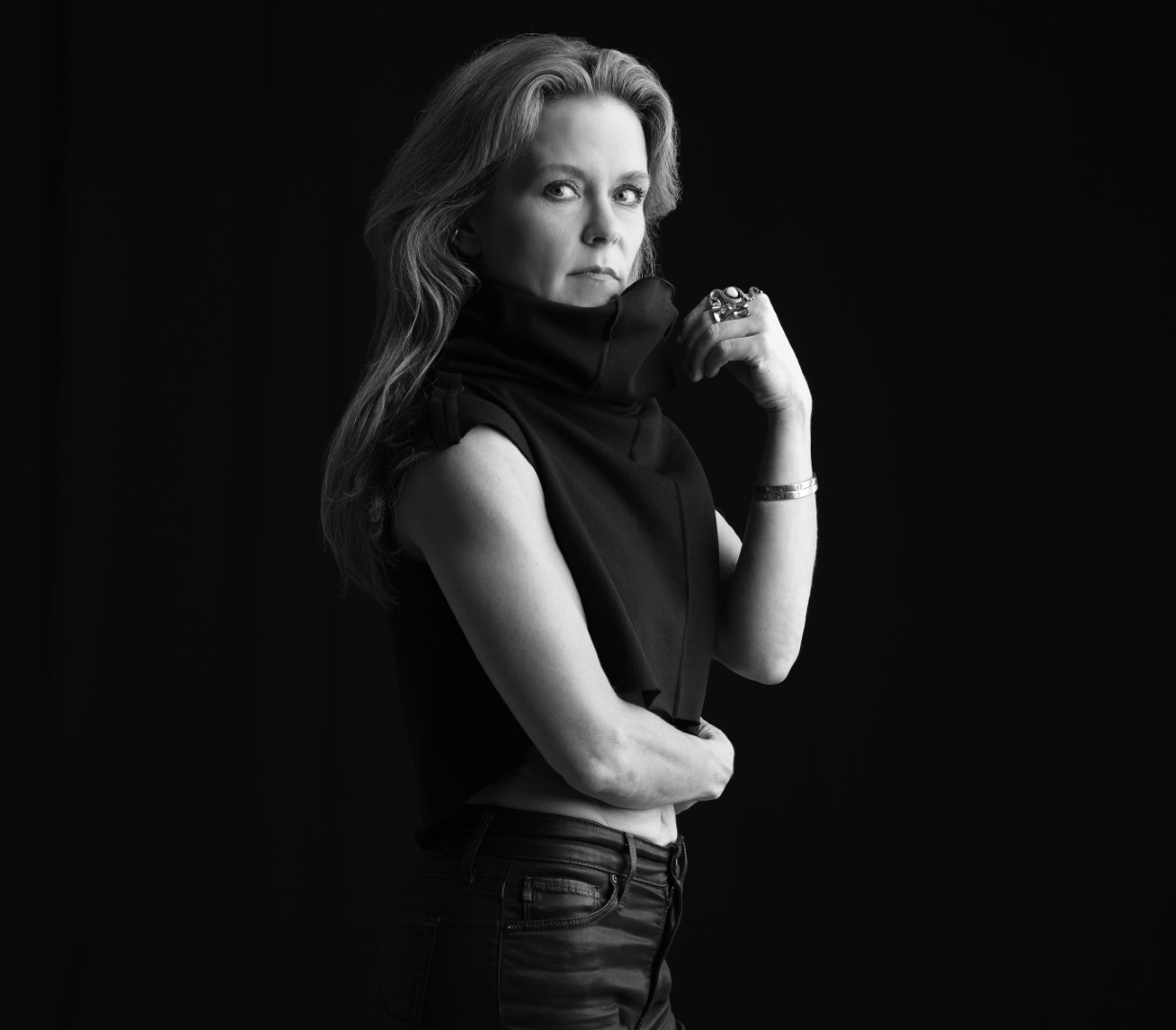
Trained in painting at the School of the Art Institute of Chicago and photography at Columbia College Chicago, her practice spans mixed-media series, installations and digital compositions. She has photographed public figures including Alanis Morissette, Robert Redford, and Michael Douglas and has worked with major clients such as Nike, The New York Times and Condé Nast Traveler.
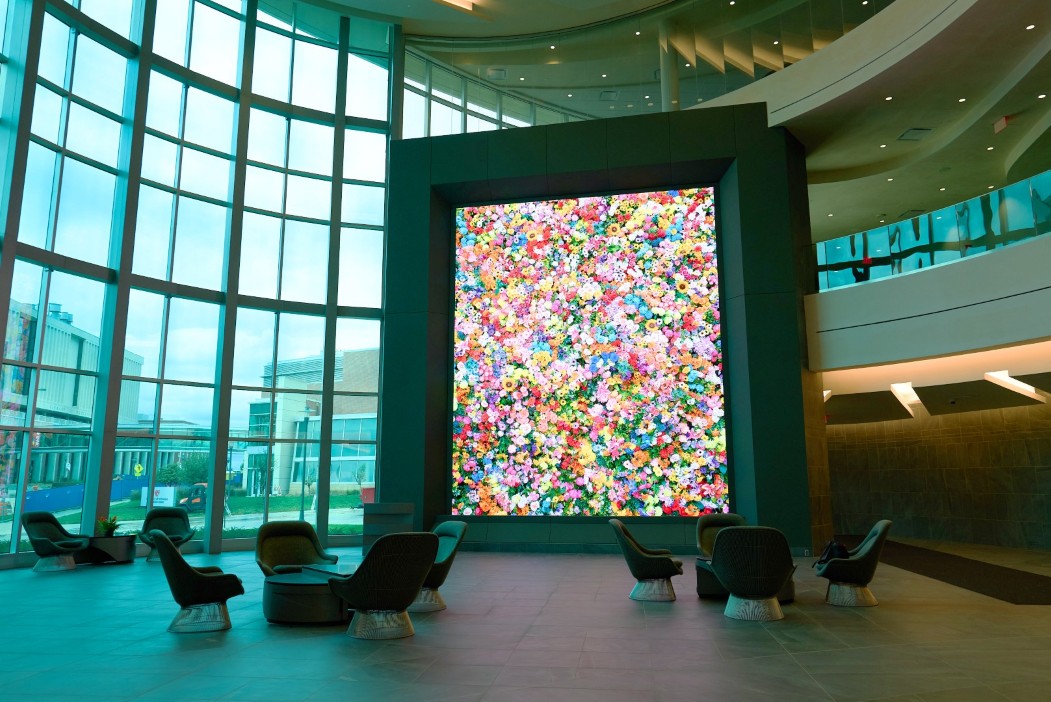
Her work appears in permanent installations at 4 World Trade Center, the Fred & Pamela Buffett Cancer Center, and collections across the U.S. Her large-scale multimedia installation Artist Hands as Instrument examining healing and art was created in partnership with the Healing Arts Program at the University of Nebraska Medical Center (UNMC). Alongside series such as Apothecary and PATHOS, she also designs limited-edition bags and accessories through her collaboration with Desmalter Paris, extending her visual world into functional objects.
In her conversation with FAULT, Laurie offers insight into her process and the evolution of her practice.
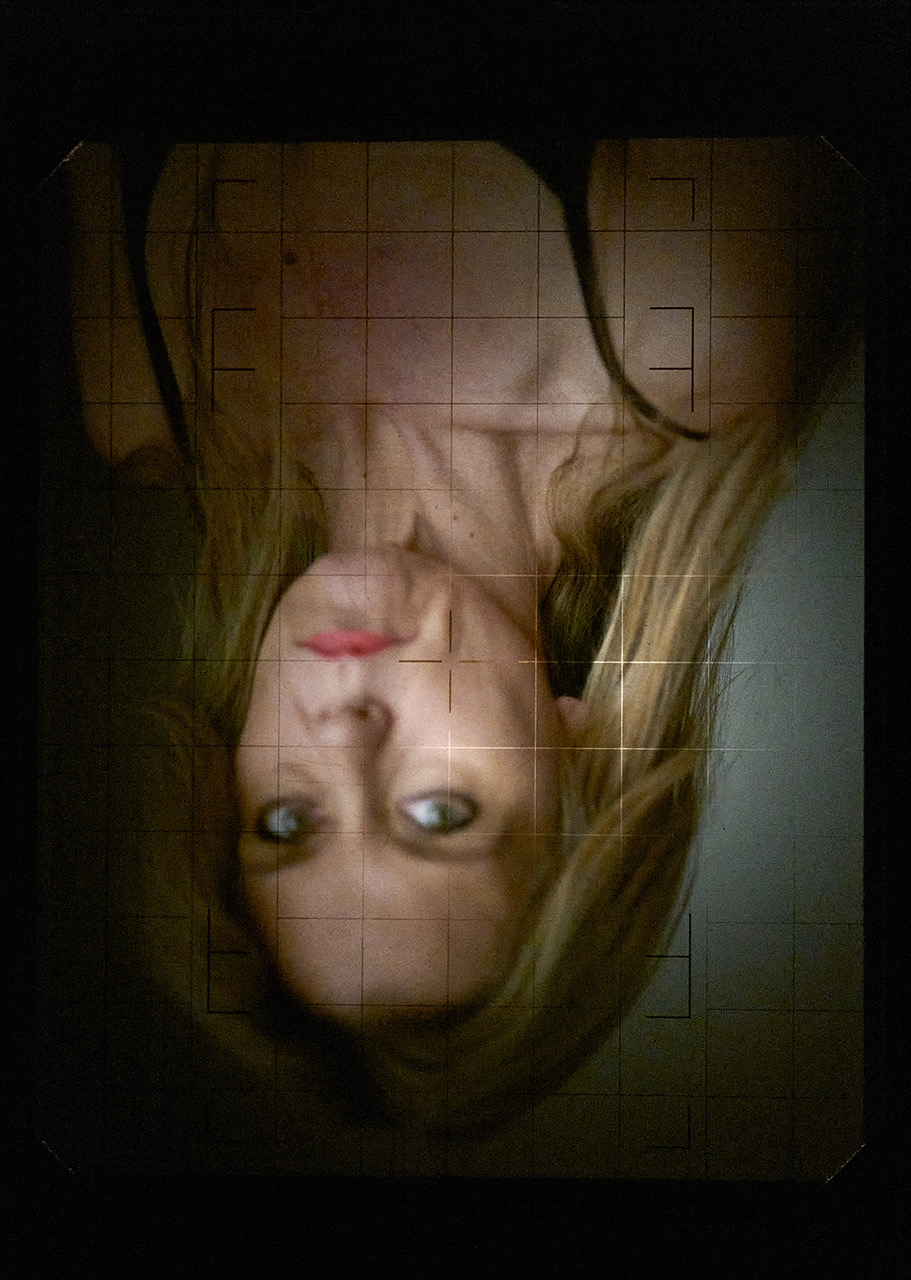
FAULT: Your work spans photography, painting, installation, and digital media. How do you describe your practice to someone seeing it for the first time?
Laurie Victor Kay: Picture a color wheel for structural reference. I have used this analogy to explain my work because it is so varied stylistically and in its mediums. The color wheel compartmentalizes opposing elements, which is essentially what I do. There was a time in my life when some people had difficulty understanding why I wouldn’t conform to one medium or style. I’m not sure I even truly understand the depth or the importance all mediums have to me until the last five years.
The first impression of my work definitely includes the words colorful, saturated, bold and emotional. My process often begins through the lens of photography, although recently I’ve found that the actual experience of my life to be the art (I’ll explain later). Materiality—objects, documents, texts, and other ephemera— is finding its way into my work. I’ve been through a lot recently and I’ve found this experience as it relates to my artistic process has profoundly deepened what I’m doing.
During recent studio visits, I’ve heard people express to me how much they felt like they were getting inside my mind. I’m willing to be very vulnerable with my process. It’s the only way I know how to be.
You live in Omaha but work around the world. Has the fluctuation from Midwest roots to international travels shaped your perspective as an artist?
The fluctuation of place is integral for me on many levels. On the one hand, travel and being out there in the world feeds my soul deeply. Paris feels like a second home to me and yet my real home is in Omaha. It’s quite a sharp contrast which is fitting for who I am. My hunger to have many different experiences and types of people in my life fits with this as well. I am not surrounded by like-minded people all the time. I’ve been described as French, Californian, and, oddly enough, never Nebraskan (what does that mean?) but also Midwestern nice. I’m super open-minded about all of this. Life would be so boring if everyone was the same. The differences might be real but I’ve learned there are more ways that we are connected. I feel that I will be able to use this more strongly than ever as I begin to take on harder topics in my work.
I love my international friends and how they’ve deepened my perspective of the world. I went through some seismic changes in my life over the past two years; losing a mother, a dog, a marriage of 26 years (half of my life) and a collaborative photography business. I had to learn so much while healing and literally seeking freedom. I went through so much I didn’t think I would get through countless times over. Getting out into the world, out of my hometown brought me so much light during dark times. Solo travel and feeling the larger world gives me meaning. I’m not sure I will ever be able to express the depth of this. Both Omaha and the world have supported me through this time in amazing ways.
Can you share a moment when something ordinary sparked a new idea for an artwork?
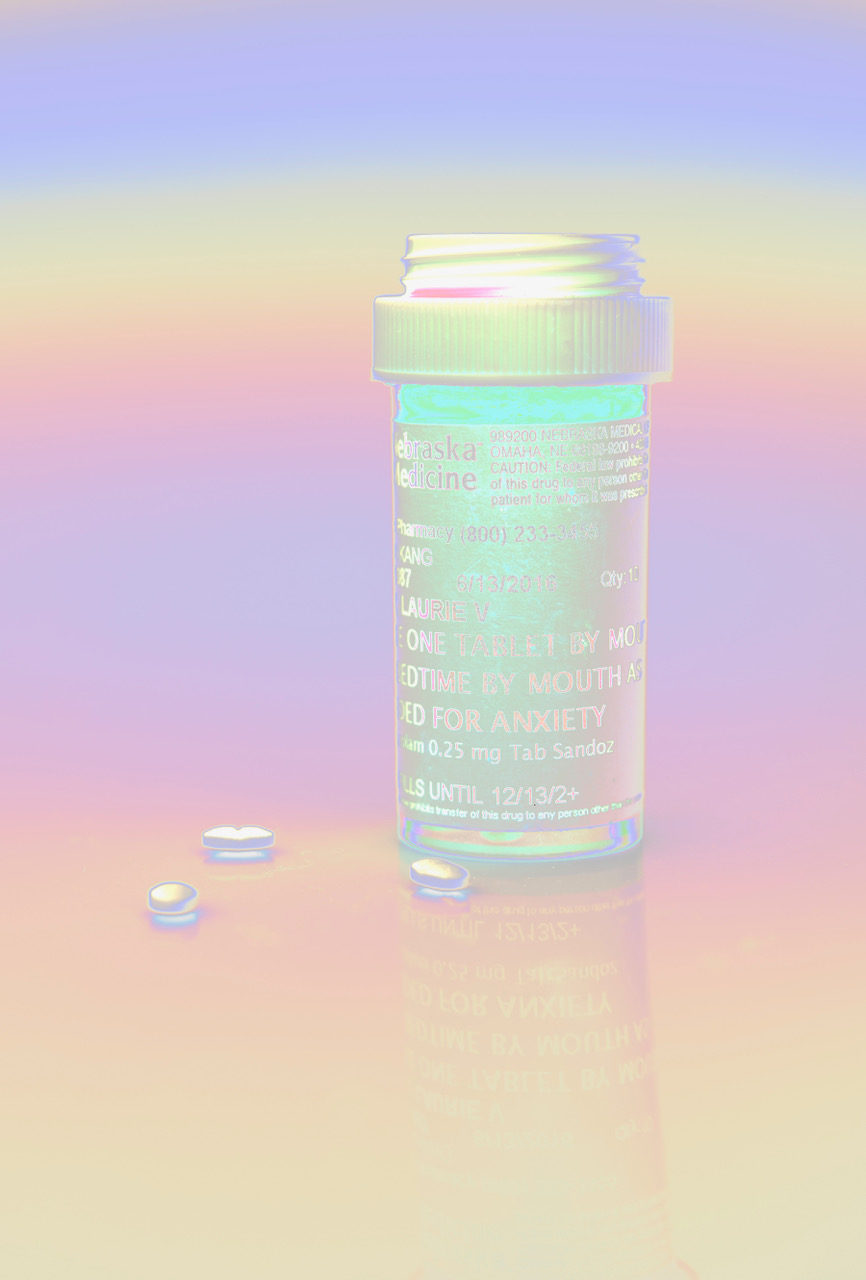
An empty plastic orange pill bottle of Xanax that I dedicated not to throw away circa 2010 started my Apothecary series. The item was about as mundane as it could get. At the time, I also looked at things like my running shoes, my headphones, even a Louis Vuitton handbag, and other daily objects, which I started photographing in ways that looked like advertising but were meant to be much deeper.
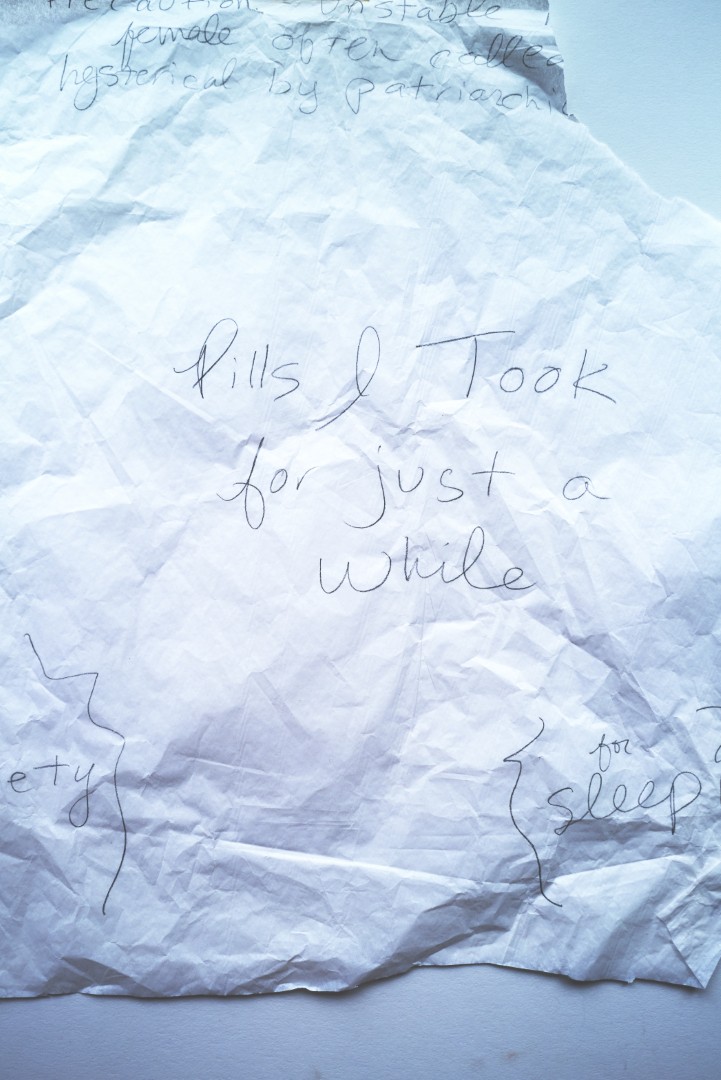
Fast forward to the present. During somewhat recent Apothecary production, I turned the archival paper that protects the print into its own work of art. “Pills I took for just a while” is a good example. This overlay spoke to me. I remembered works I’d seen in a museum in Edinburgh, Scotland, with leather protecting fragile documents from light. I thought of 4×5 camera drop cloths and hiding under them to capture something. Suddenly this fragile tissue paper seemed integral to the work. I decided to draw on it. I thought to myself, “who decides what the art is?”
And then, yesterday, in my studio, I was photographing my newest Desmalter Paris creations that are hand-made in France. They are handbags with tromp l’oeil paintings of my paintings—sort of meta and so cool. While I was doing this I broke a plate by accident while making coffee. Before I knew it I was drawing text on the plate and putting broken pieces of it next to a nearly dead rose that I attached with an old wire plate hanger. My creative mind wanders now and I let it be free. For a long time I did not feel creatively as free, so it’s moments like these whichI absolutely embrace.
You work across both digital and physical mediums. How do you decide which direction a new piece should take?
I let the work tell me as I go. It is very intuitive. Often the works are mixed in some way, shape or form. Digital mediums still need to have some sort of physicality. I’m not sure how to describe this. For many years I’ve used digital drawing and even tools within Instagram to create ideas. Communication through my work is so important. I’ve found that the digital parts even in my use of photography to capture the physical objects I create is instrumental.
Speaking of that word, my Artist Hands as Instrument project at the Davis Global Center, University of Nebraska, was a project that really encompassed every level of physical to digital media, including my own hands. I think being able to work on so many levels for that project really helped me understand this even better.
Your use of color is such a central part of your work. How does color guide you when you’re beginning a new piece?
Color is all-caps EVERYTHING to me. I’m extremely specific about my uses of color and there are patterns and hues that repeat themselves in subconscious ways. My psychologist and past therapists have made observations about my ability to live in emotions. “Laurie, maybe you should just write descriptive facts when you journal.” The reason I’m sharing this is because how my brain works as it relates to color is something so entirely connected to my emotions I cannot even express fully. When I say, “I see the blues, I feel the blues,” this is a statement that is visceral.
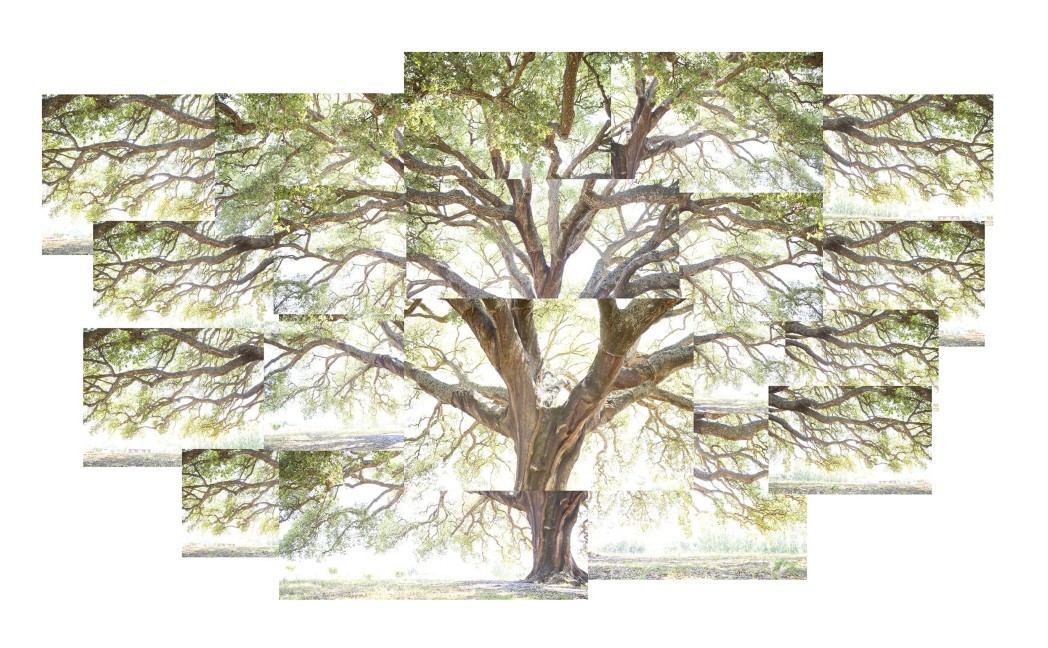
For a very long time my world was desaturated internally. During this time as well I continued to use color in my work to see, feel, and express beauty and to find hope. Color gives me so much and that is why I consider things like the color blue a noun, verb, and key player in my work. I created my first large-scale tree painting a few months ago. Yellow was almost screaming or beaming in my mind as I was painting on top of the pigment ink photograph. The largest cork tree in Portugal that I photographed, deconstructed and reconstructed on multiple levels became something with the addition of the color. I felt it deep inside of me.
Your work holds a lot of emotion. What does caring for yourself look like during the making process?
Well, I suppose that is a loaded and very good question. Making art is one of the only things that completely takes me out of panic attacks and severe depression. How’s that for honesty? When I pour myself into the creative process, it is the most fulfilling and in-the-zone I can be. As a person that has struggled in the past with things like insomnia, depression, anxiety, I’m aware of the things I need to take care of myself. I made huge life changes to do this. In January 2024, I left my family home and marriage of 26 years. This was the biggest “taking care of myself” I’ve ever done. The past two years have been tough but what I know is that creative freedom and being alone are the most incredible things for my creative process.
Currently, caring for myself in my new space means that I allow my studio/home/atelier to be messy if I need it to be. I give myself a lot of grace. I live in my mom’s home; I lost her to cancer shortly before leaving my marriage and collaboration. What I learned through this entire process as it relates to me creatively is that life is fucking short. Kindness is everything. Kindness to ourselves, kindness to others. I’ve experienced some seriously unkind things in my life for which there are no words. It is through my art that I can share my joy, pain, and all the in-betweens.
You’ve collaborated with partners in design and technology as well as a recent handbag collection. What tells you a collaboration is the right fit?
Collaboration that is successful requires a few simple things: trust, respect, and communication. If these elements are not present, the process will not work. I know and understand this on so many intricate levels. I’ve been so fortunate to have had incredible collaborations that elevated artistic processes for everyone involved. I am so grateful.
What does a good day in your studio look and feel like?
I love early morning yoga or a long run. I alternate these most days. Coffee starts early and often. I visualize my day, I write lists, and have some goals for certain days when there are deadlines, emails, or client correspondence, or to be honest I will not remember. I’ve been working on some projects that have kept me quite busy over the past few months. A really good day for me includes creating something: printmaking, digital works, even making reels for Instagram are something I find fulfilling. I want to share my process and space with the outside world.
What’s next for you—any new projects, mediums, or ideas you’re excited to explore?
I’ve started a new series titled 100 Days, which I am excited about. I will be able to share more about this in the future. For now, I can say that it’s a behind the scenes look at an experience I’ve had leading up to something. I’m fighting for my work right now in a process that is incomprehensible and so turning the lens on myself seems like a good way to understand it.
In 2026, I’m also planning more time for large-scale tree paintings. I will be going to Morocco to write. There are books to come. A short video. And more.
Also performance art as part of Apothecary. I don’t know what it will look like but it is expressive as fuck and I am using my voice in new ways.
And finally, what is your FAULT?
My fault is my sensitivity.