Samara Couri Paints the Spiritual Landscapes of Hawai’i
Samara Couri
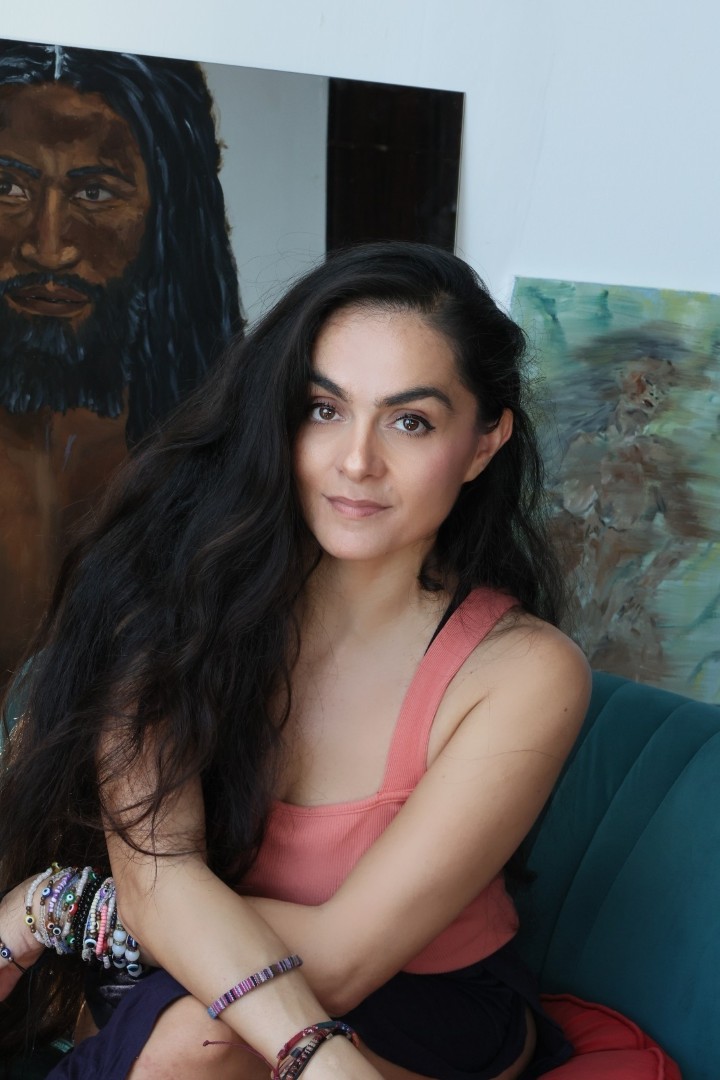
Living between London and Hawai’i, artist Samara Couri creates work shaped by ancestry, environment and spiritual connection.
Her paintings explore the relationship between Indigenous identity and the natural world, drawing on Hawaiian philosophies surrounding Akua, land and cultural responsibility. In conversation with FAULT, Couri reflects on artistic immersion, collaboration with cultural practitioners, and the evolving dialogue between body, landscape and memory that defines her work.
FAULT: How did growing up in London shape your artistry, and has it changed since moving to Hawai’i?
Samara Couri: Growing up in London exposed me to a wide spectrum of art, ideas, and communities, but moving to Hawai’i shifted my sense of place entirely.
Hawai’i is a place where the land has a voice, where the environment, the stories, and the ancestral lineages are alive in everyday life. Being welcomed into that space has deepened my understanding of what it means to belong, to listen, and to create with intention.
Spiritually, it grounded me. Artistically, it pushed me to work with materials and methods that reflect impermanence, reflection, and relationship.
What is the story behind your collaborations with cultural practitioners and grassroots organizations?
Being in Hawai’i, I think it is very important to contribute and learn as much as possible. Collaborations with different cultural practitioners such as Kumu A’ia’i Bello (who has unfortunately passed away and to whom I am forever indebted for teaching me all that she has) and volunteering for organizations such as the Nation of Hawai’i as well as directing attention to Ka Lahui Hawai’i, have all shaped the way I work and look at things, giving me a greater awareness of the layers that the islands have. It ensures that my process honours lineage, accuracy, and community.
If my work can serve as a bridge, encouraging understanding, amplifying Indigenous voices, or inviting people to engage with Hawai’i beyond the surface, then I feel I’m doing something meaningful. Working within Indigenous contexts requires deep respect, humility, and accountability. It’s important to create relationships with people who carry that knowledge.
What first drew you to the concept of Akua, and how has that understanding evolved over time?
It is such an integral part of what makes Hawai’i. It is a huge part of its history and philosophies and so I wanted to learn more about this deep subject.
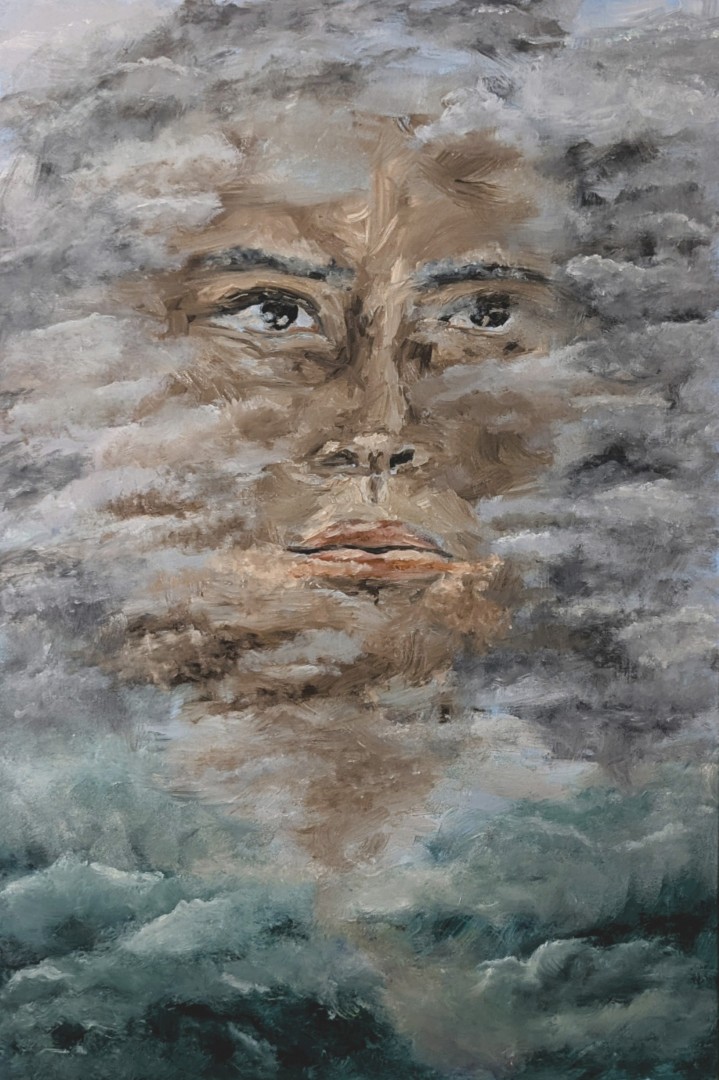
I have understood that each Akua represents a natural element or action: fire, rain, forest, and so on. In my mirror paintings, I personify them into figures incorporating their respective elements. These Akua connect with one another, sometimes closely or as polar opposites like fire and snow.
So for the series of paintings I did of them, each piece forms part of a pair: two mirrors facing each other, each painted with an Akua. Their interaction reflects connections between the Akua and us as people. Since the Akua, embodying nature, gives us life, we must give back to sustain all forms of life. This creates an immersive experience inviting the viewer into the world of the Akua to understand their vital roles and our responsibilities as humans.
In what ways does your work explore cultural responsibility?
Cultural responsibility is present in the intention behind my work. I aim to create pieces that honor the Hawaiian worldview without reducing it to aesthetic symbolism or tourism imagery. The paintings are meant to hold space for ‘ike kupuna (ancestral knowledge), Indigenous resilience, and the responsibility we carry to remember where we come from. Rather than presenting Hawai?i as paradise, my work speaks to Hawai?i as a living, sacred place with memory, power, and ongoing struggle.
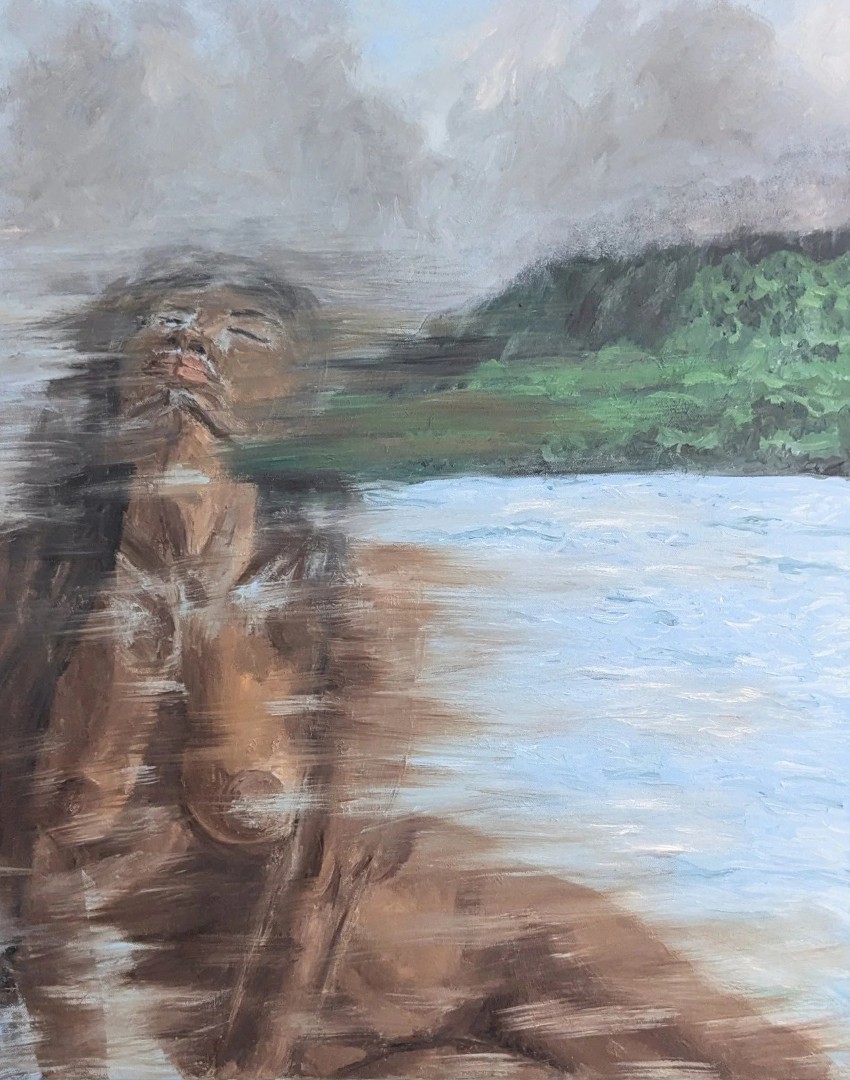
My work explores cultural responsibility through the relationship between kanaka maoli (Native Hawaiian), ‘aina (land), and ancestral memory. I paint Indigenous Hawaiian figures not as subjects separated from nature, but as extensions of the land itself. In Hawaiian philosophy, the land is not a resource to possess; it is a living ancestor that carries genealogy, spirit, and responsibility. Because of this, my work is grounded in the idea that caring for culture cannot be separated from caring for the environment, community, and the stories passed down through generations.
With your current works on canvas, what discoveries have been most exciting or unexpected?
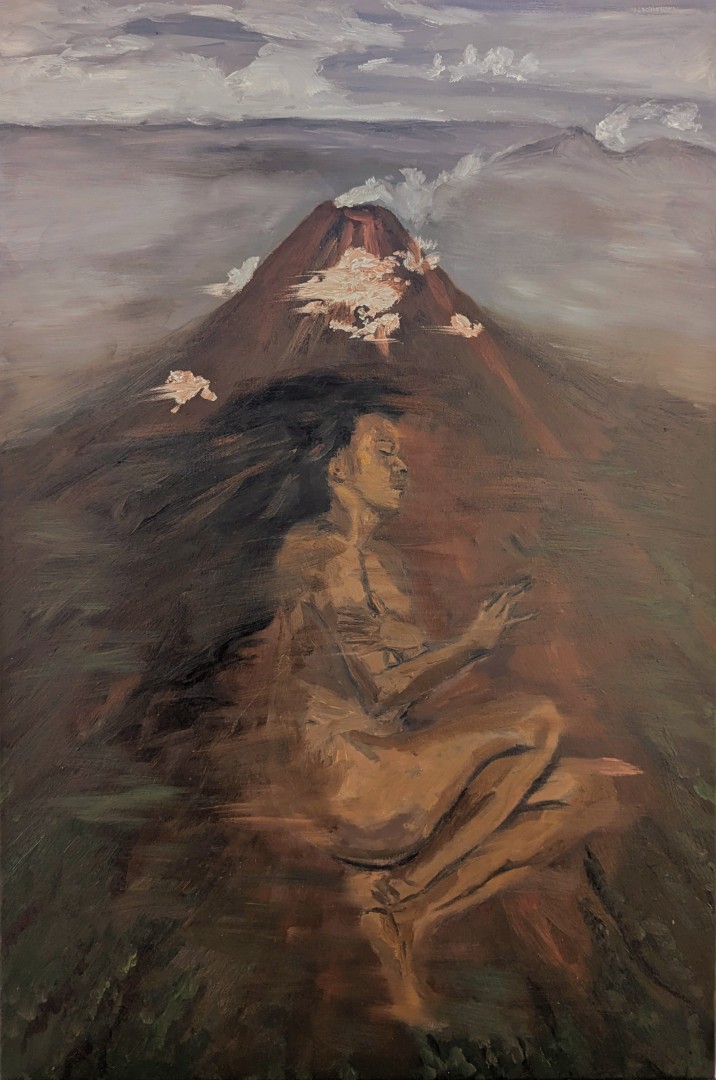
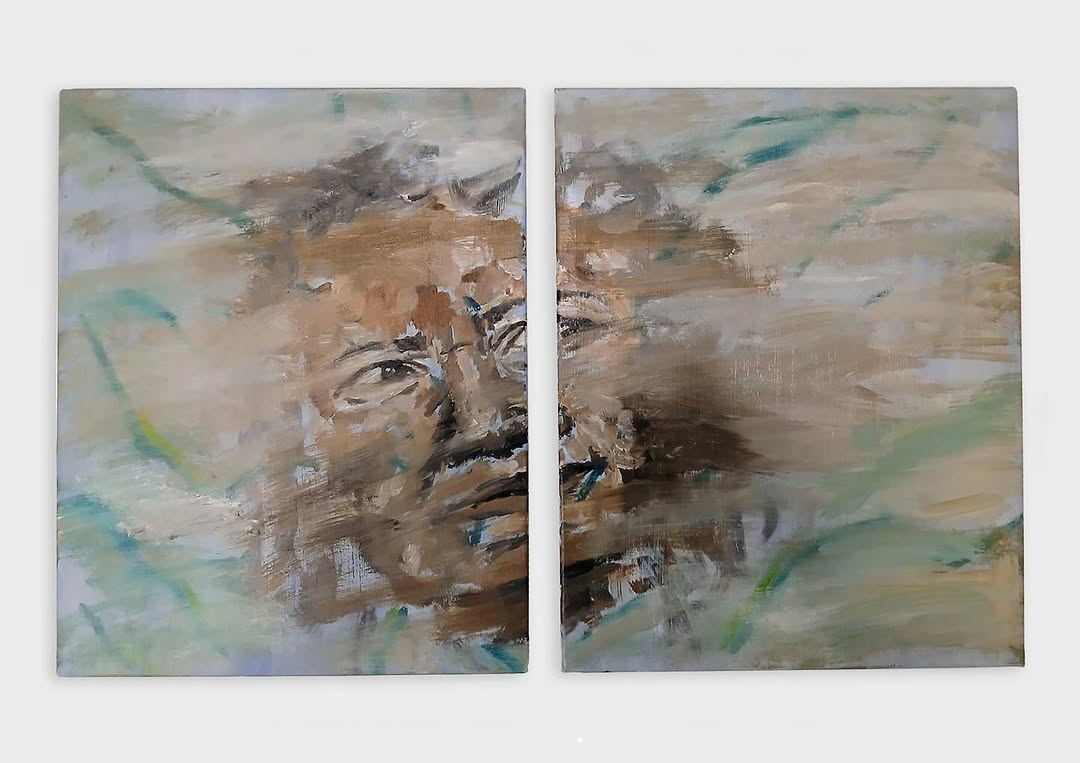
One of the most exciting discoveries has been realizing how naturally the human figure can dissolve into the landscape without losing its identity. As I continue painting the Indigenous figure merged with the landscape, I have found that the boundaries between body, spirit, and environment become less separate. The figures begin to feel less like portraits and more like embodiments of living forces, as though the land itself is taking human form. That discovery has deepened the emotional and spiritual direction of the work in ways I did not initially expect.
Another unexpected discovery has been how much the process itself mirrors the philosophies within the paintings. The layering, erosion, texture, and movement of paint often resemble natural cycles of formation and destruction, similar to lava flows, tides, weather, and geological transformation. Sometimes areas I originally planned to control become the strongest parts once I allow them to shift organically. That tension between intention and surrender has become an important part of the work, reflecting Hawaiian understandings of nature as something living and uncontrollable rather than fixed.
I have also been surprised by how strongly themes of resilience continue to emerge, even when they were not consciously planned. The figures often carry a quiet sense of endurance, existing within powerful natural elements without being consumed by them. Through this, the paintings have become not only explorations of Indigenous identity and connection to ??ina, but also reflections on survival, memory, and regeneration. The more I paint, the more I realize the work is revealing relationships between people and land that feel ancient, intuitive, and still very present today.
To what extent does the environment you’re painting in shape the final piece?
The environment I paint in shapes the final piece in a very direct and intuitive way. Right now, living and working within Hawai?i means that the atmosphere, weather, ocean, volcanic landscapes, moon cycles, and energy of the ??ina are constantly present during the process. The work is not created from observation alone, but from immersion which affects the emotional tone of the piece itself. Because of this, the paintings often feel less constructed and more grown or formed through the environment around them.
The physical environment also shapes the spiritual and conceptual direction of the work. Painting within a certain environment creates a sense of responsibility and awareness that naturally enters the work. Often the energy of a place or a moment determines the palette, movement, or emotional weight of a painting before I consciously decide it.
At the same time, the environment affects the process emotionally. There are moments when storms, flooding, ocean conditions, or shifts in the landscape change the feeling of the work entirely, causing the paintings to become reflections of collective experience rather than purely personal expression. Because of this, I see the environment not as a backdrop to the artwork, but as an active collaborator in the creation of each piece.
What is your FAULT?
My FAULT would be sometimes eating too late at night therefore sleeping far too late!