What is included in a bespoke suit fitting process?
A bespoke suit fitting is not a single appointment. It is a structured process that unfolds across several stages, each one designed to bring the garment closer to a perfect result. From the first body measurement to the final press, every step serves a specific purpose. For men who invest in premium tailoring, understanding what happens at each fitting removes the guesswork and sets clear expectations. This guide breaks down the full process so that anyone preparing for their first or next fitting knows exactly what to expect.
The Key Stages of a Bespoke Suit Fitting
The bespoke suit fitting process follows a deliberate sequence. Each stage builds on the last, and skipping any one of them can affect the final outcome.
Stage One: The Initial Consultation and Measurement Session
The process begins with a detailed consultation. At this stage, the tailor gathers information about the client’s lifestyle, the suit’s intended purpose, and personal style preferences. Premium bespoke suits for men are built around these details, not just around body measurements.
After the consultation, the tailor records precise body measurements. These typically include chest, waist, hips, seat, shoulder width, sleeve length, back length, and inseam. The tailor also notes posture traits, such as a high shoulder, forward lean, or uneven hips, because these affect how the pattern gets drafted.
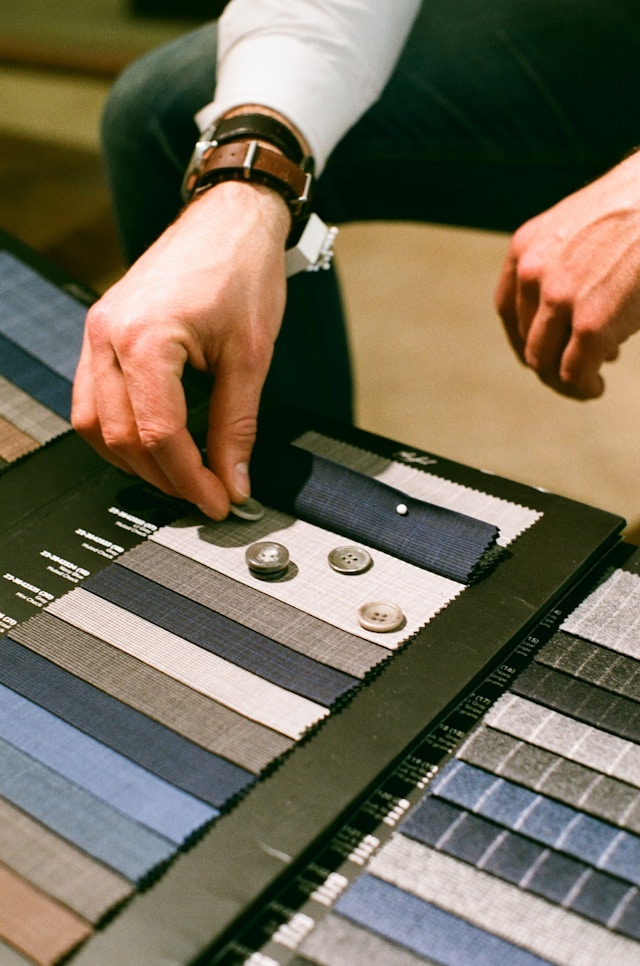
Once measurements are recorded, fabric selection follows. The client chooses from cloth swatches, and the tailor advises on weight, weave, and durability based on the intended use.
Stage Two: The Baste Fitting
The baste fitting is the first time the client sees the suit take shape on their body. At this point, the garment is loosely stitched together using temporary thread. It looks rough, but that is intentional. The tailor uses this fitting to check the foundational structure: shoulder placement, jacket length, chest balance, and trouser break. Corrections made here shape everything that follows.
What Your Tailor Is Really Looking for During Each Appointment
Most clients focus on how the suit looks in the mirror. A skilled tailor focuses on how the fabric behaves on the body. These are two different perspectives, and both matter.
The Technical Details That Drive Every Fitting Decision
At the base fitting, the tailor checks for drag lines and fabric pulls. These are visible creases or tension points that reveal where the pattern needs adjustment. A pull across the chest, for example, may indicate the jacket is too narrow or the armhole sits too low.
During the forward fitting, which comes after the baste stage, the suit is more fully constructed. The tailor inspects collar roll, lapel lie, side seam alignment, and button stance. The trouser fitting at this stage covers seat fit, thigh room, and waistband height. Each of these points gets marked with chalk and adjusted before the next stage.
At the final fitting, the tailor confirms that all previous corrections were executed correctly. They check the hang of the jacket from the back, the sleeve pitch, and the overall drape across the shoulders. Buttonholes are inspected for placement and finish. The trouser hem is set at the preferred break, whether that is a clean no-break, a slight break, or a traditional full break.
Beyond the physical checks, a good tailor also listens during each appointment. If the client reports discomfort in the armhole or feels restricted in the shoulders, that feedback gets factored into the adjustments. The fitting process is a dialogue, not a one-sided assessment.
Conclusion
A bespoke suit fitting process is a series of precise, connected steps. Each appointment adds accuracy and refinement to the garment. Clients who understand what happens at each stage can engage more actively, give better feedback, and leave with a suit that fits the way a truly bespoke garment should. The investment of time in this process is what separates a bespoke suit from anything made off the rack.