René Romero Schuler: Painting Without a Face
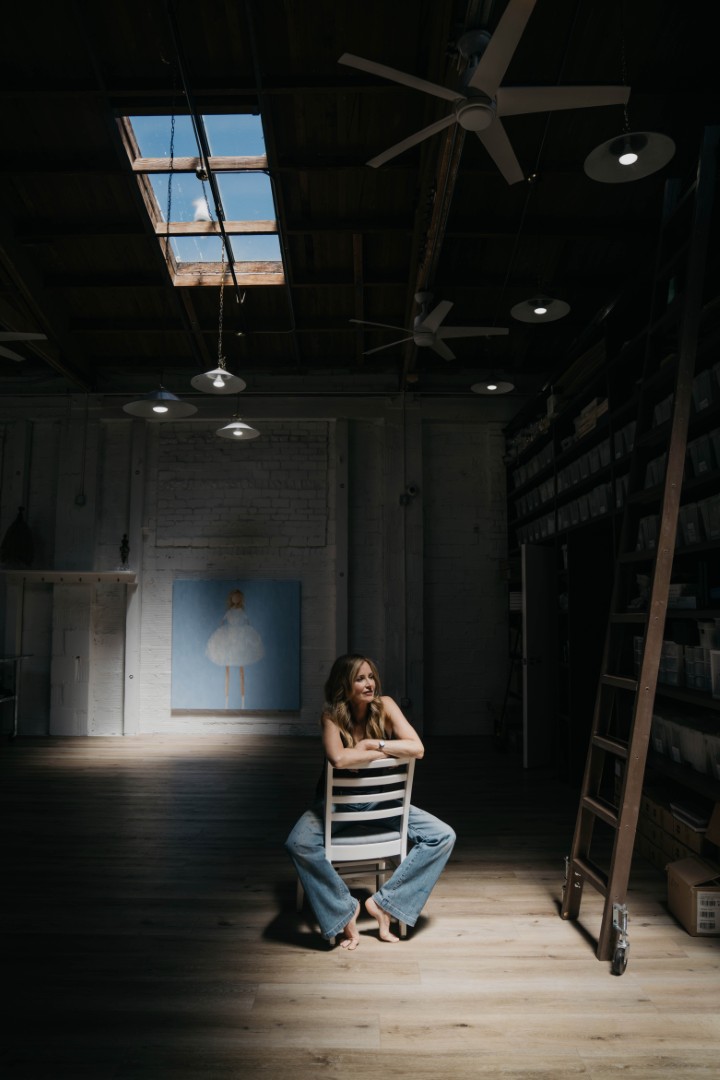
René Romero Schuler is an American painter and sculptor whose work explores the emotional complexities of the human condition.
Best known for her textured, semi-abstract portrayals of faceless female figures, Schuler creates works that allow viewers to project their own experiences onto the anonymous forms. Drawing from a challenging early life that included periods of homelessness, René Romero Schuler eventually taught herself to paint and developed a visual language centred on resilience, healing, and connection. Her work is exhibited internationally and included in museum and institutional collections across the U.S., Europe, and Asia. Her forthcoming book, 100 Paintings, will be released by Jasper Press this month (March 2026).
FAULT: For readers discovering your work for the first time, how would you describe what you create?
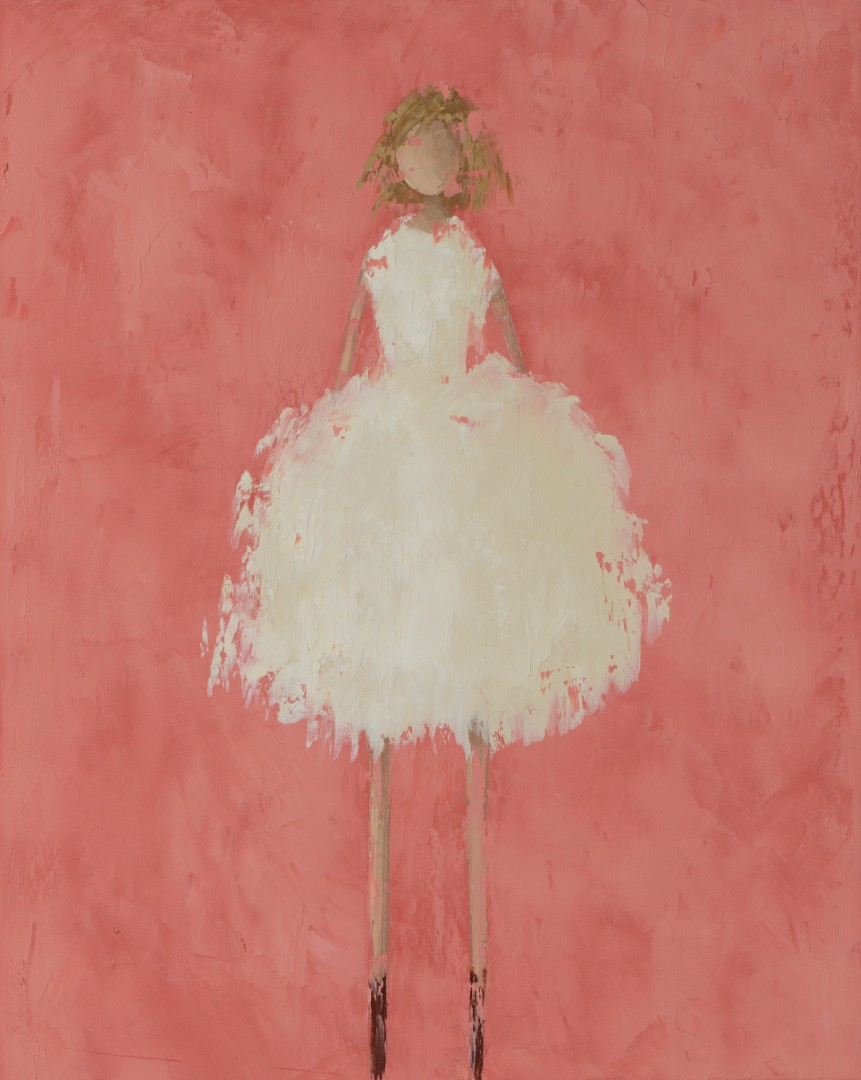
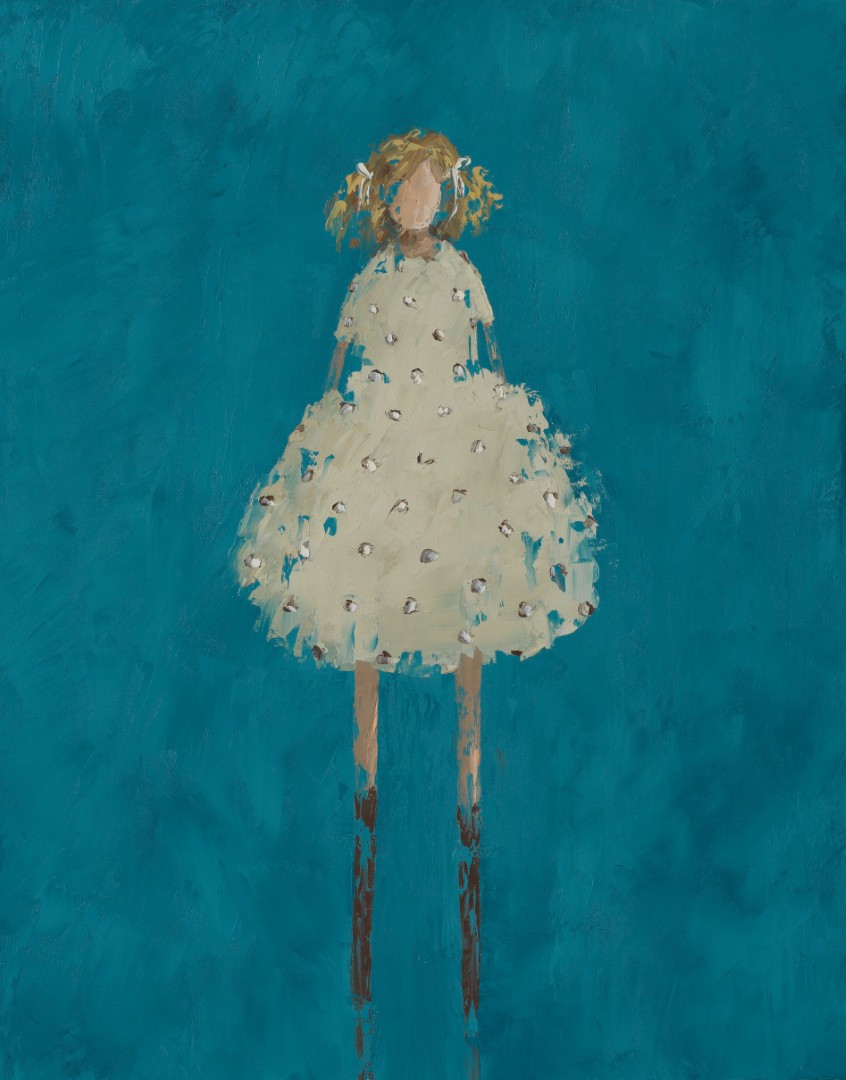
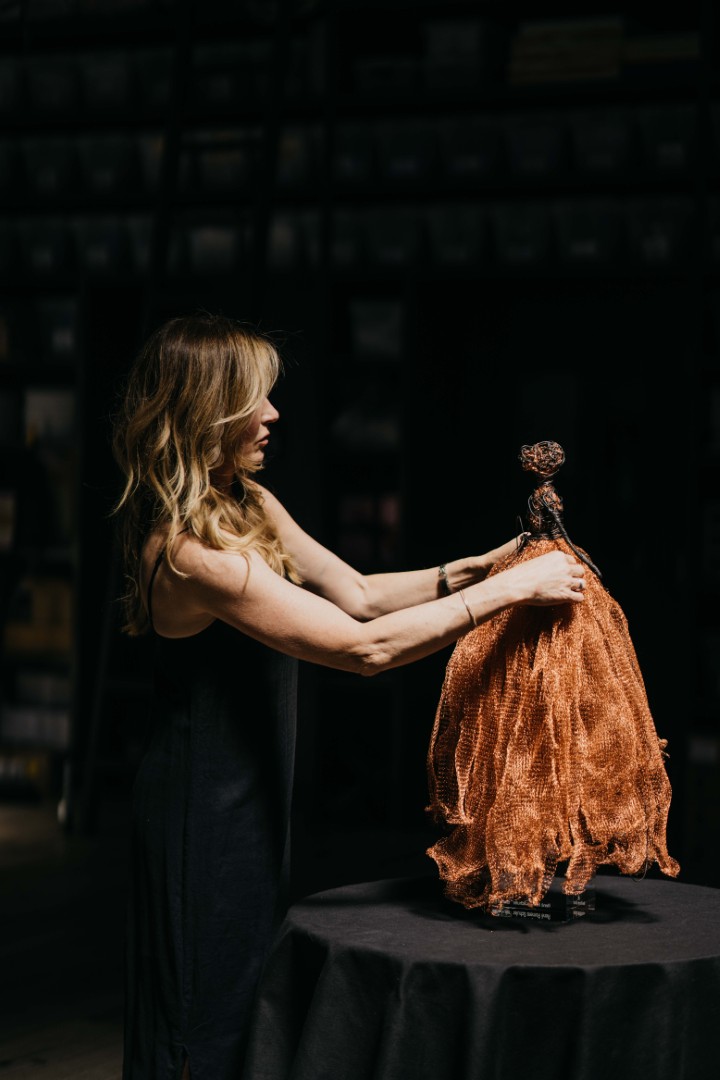
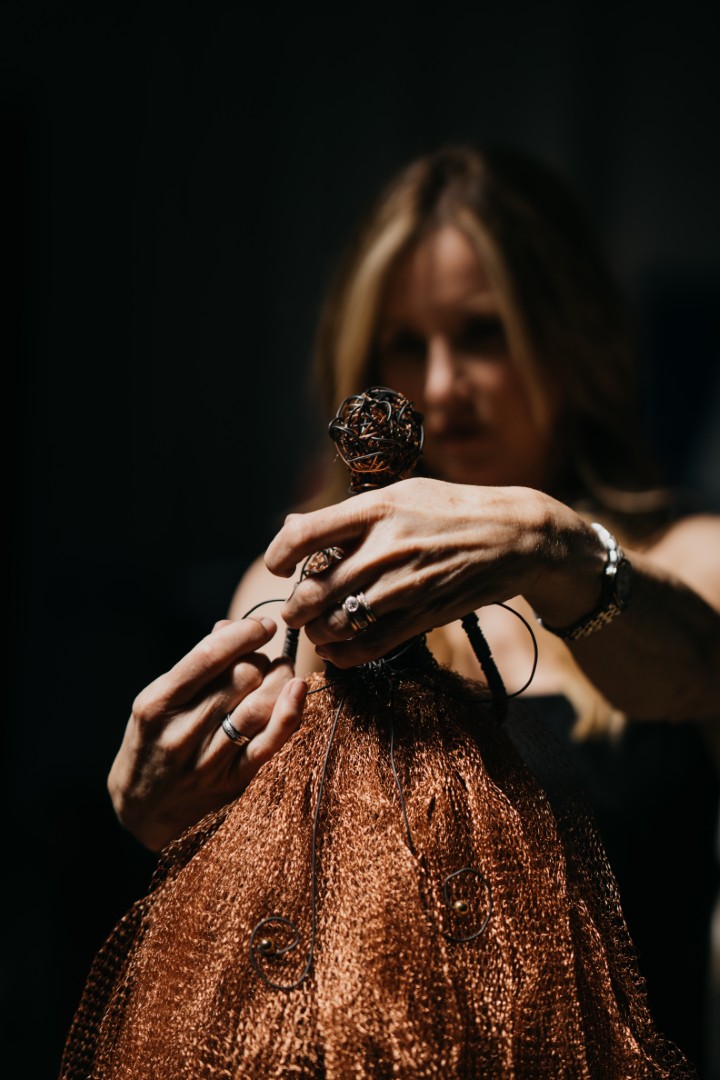
René Romero Schuler: I always say that I am an abstract figurative painter and sculptor. I work exclusively with palette knives and oil paints in an impasto (thick layering) technique, creating figures that represent the female form. My sculptures are created in steel wire, and occasionally embellished with other objects like beads, glass, shells, etc.
Your paintings often feature faceless female figures. Why did you choose to remove the face from your subjects?
I wouldn’t say I “remove” them, but rather, I never put them into my figures. This is deliberate, as I find that when you start adding too many discernable characteristics, it takes away from someone’s ability to see a bit of themselves in my figures, and that is the most important part. The visceral connection that can be experienced when encountering a piece of art is one of the most wonderful experiences that a person can have, and to have that experience, and feel any sense of being seen and understood, that is just the ultimate outcome. I want that so, so much in the works I create.
How did you first become an artist? Was there a specific moment when you realized painting would become your path?
I realized that I was an “artist” when I was in kindergarten, and, truth be told, I have never wavered. It has been my life’s path, and I have pursued it in any way that I could through my younger years, in my education, and, upon leaving high school, I began calling businesses to offer commissioned art pieces for offices and lobbies around Chicago. That was the beginning. I was waitressing and bartending to make ends meet early on, but my painting career quickly flourished into a full-time career.
The surfaces of your paintings are very layered and textured. Can you describe your process in the studio?
I typically start by organizing my environment and then my mind. I answer emails, make calls and appointments. I tidy up the space. I meditate to ground my energy and see where I am emotionally and spiritually. I usually see this as a color, and I start mixing paint that will become the background color field for what I will work on. The figure then begins to emerge through the paint, and her story begins…
Your early life experiences shaped much of your perspective. How have those experiences influenced the themes in your work?
I think all of us could say that our early life experiences shape who we become. I am no different. I weave my stories into the works I create, and the process of unraveling the stories over and over helps to heal old wounds, and it helps me to feel strong, grounded and clear. Art is a healing practice for all who create. Art also empowers me to help others to heal by sharing my experiences and allowing others to maybe see that they are never alone in their own suffering, their own experiences, their own stories. We can share these things and not feel ugly for having lived challenging lives, but actually feel more beautiful because of them.
Many viewers say they see themselves in your work. What do you hope people feel when they encounter one of your paintings?
I hope they feel a sense of being understood, heard, seen, held, and loved. And that they are beautiful.
Your figures feel both strong and vulnerable at the same time. Is that contrast something you intentionally explore?
Absolutely. I am very much both of those things, and often not particularly 50/50. I usually lean to the side of feeling self-conscious, anxious, imperfect, inadequate, ugly, clumsy… take your pick. My figures help me to find the balance I need. They ground me and help me to find the strength that I might feel I lack on any given day.
You work in both painting and sculpture. What does sculpture allow you to explore that painting doesn’t?
Air. Ether. Spirit. The way light and shadow can play through the wire is very symbolic for me as I’m always exploring the notion of all of us being spiritual beings.
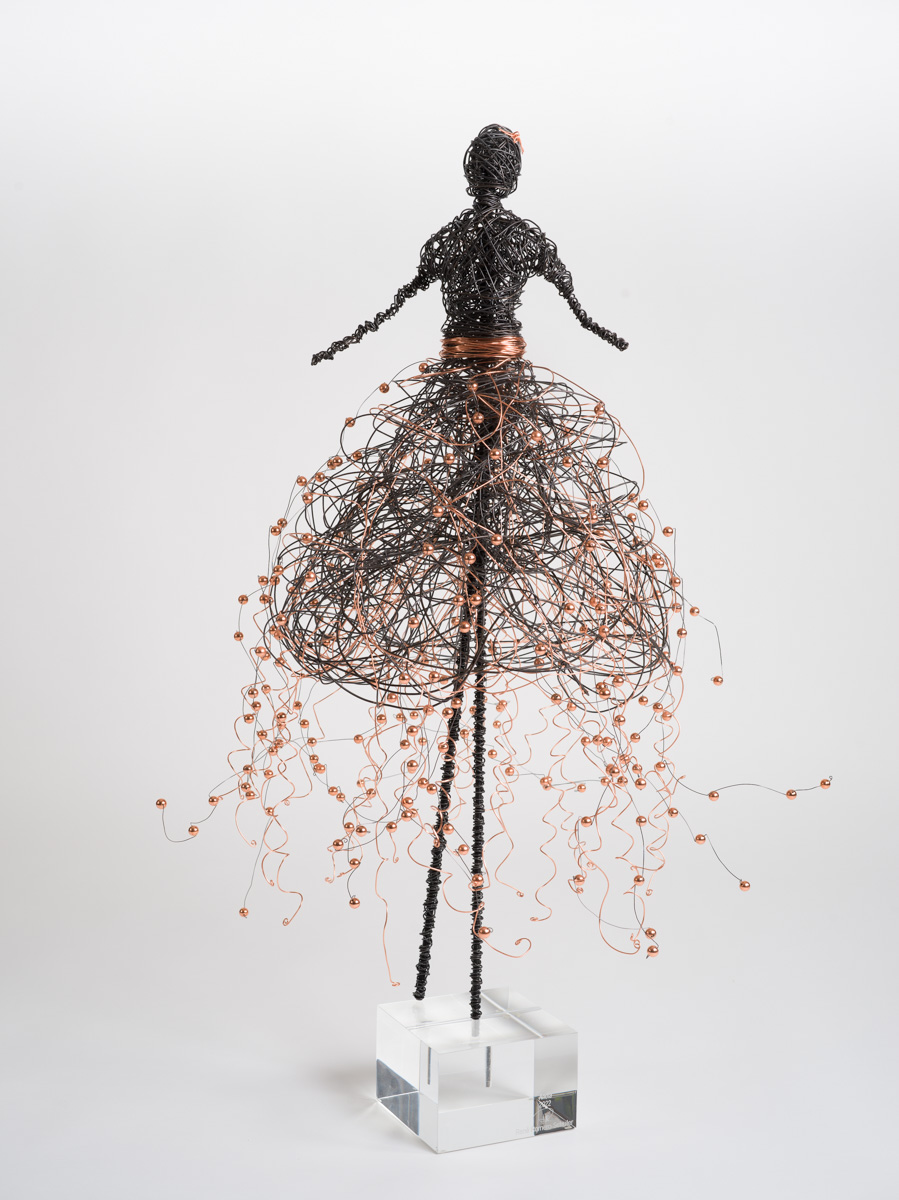
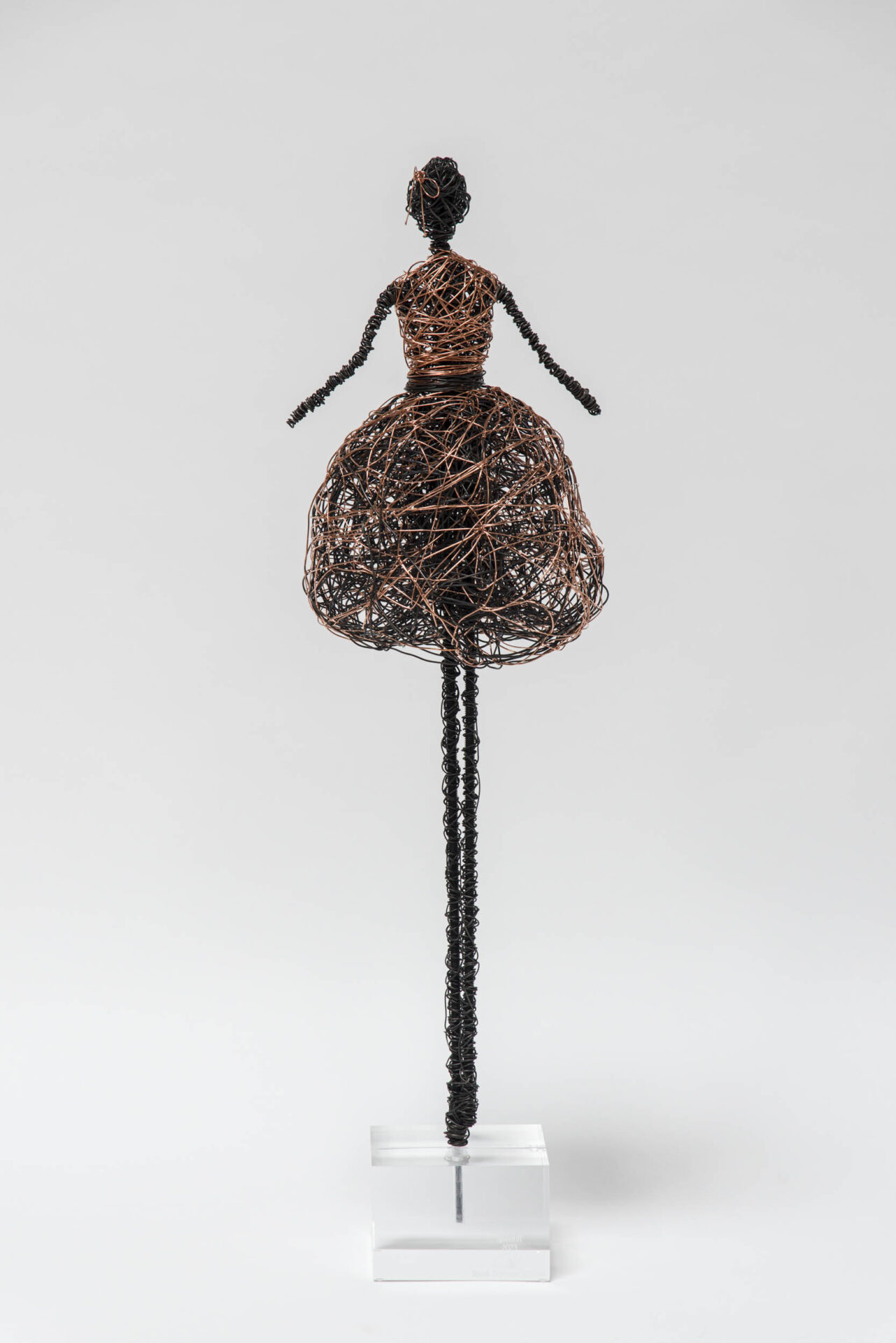
Right: ‘SPINDRIFT’, 2023, Steel and copper wire, 38.5 x 11 x 9 in
What are you currently working on in the studio?
I have several commissions, a really incredible collaboration with an international brand, a fourth published coffee table book coming soon, and I’m preparing new works for upcoming shows…and just trying to manage all of that!
Outside of art, what inspires you the most in everyday life?
Hiking. I love my time out on the trails, time with my friends and loved ones, snuggles with my favorite doggie Roland, and just treasuring every adventure.
What advice would you give to artists who are still finding their voice?
Keep creating work. The voice comes through when you maintain consistent effort. Don’t get caught up in negative self-talk and doubt. Just keep creating. Keep creating!
And finally, what is your FAULT?
That sounds like a sort of negative question, and my first thought was “what isn’t my fault”? But I want to stay positive, so I will say that my fault is the calm, the in between, the space where the stories live. It’s a little murky and heavy in there, but it’s all power and such an important thing to have in life.