Renée Levin on Scale, Shadow and the Emotional Lives of Objects
Renée Levin is known for transforming nature’s smallest details into moments of quiet intensity.
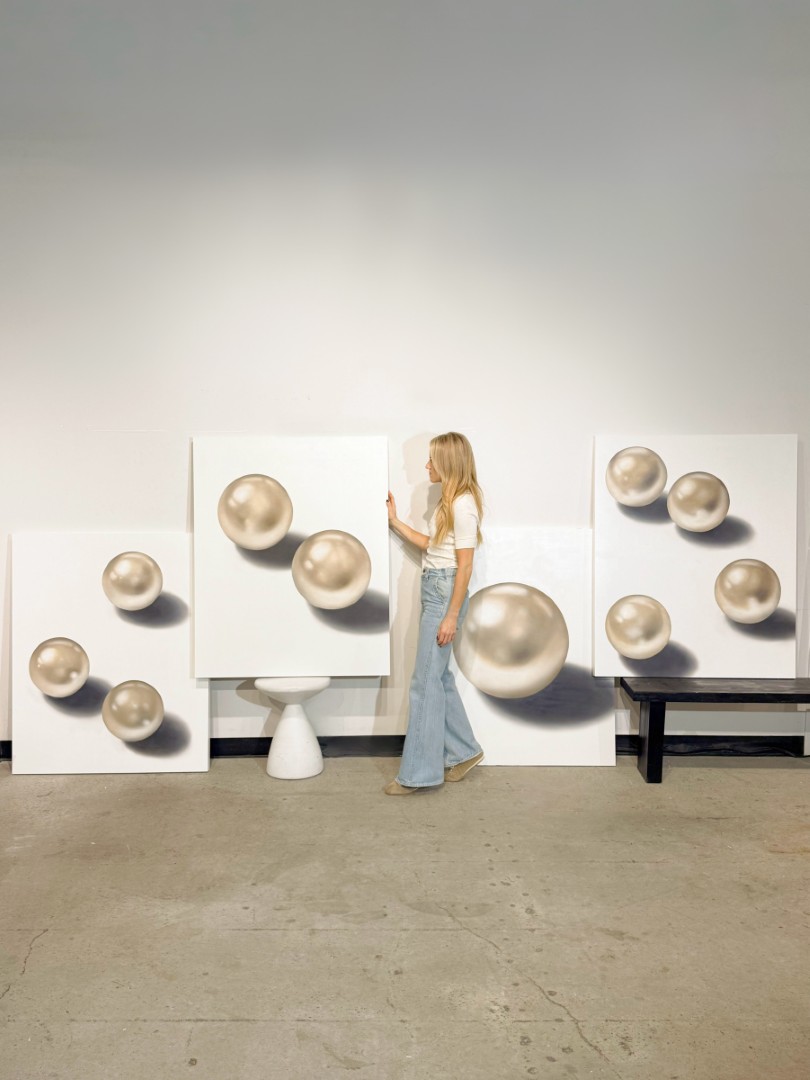
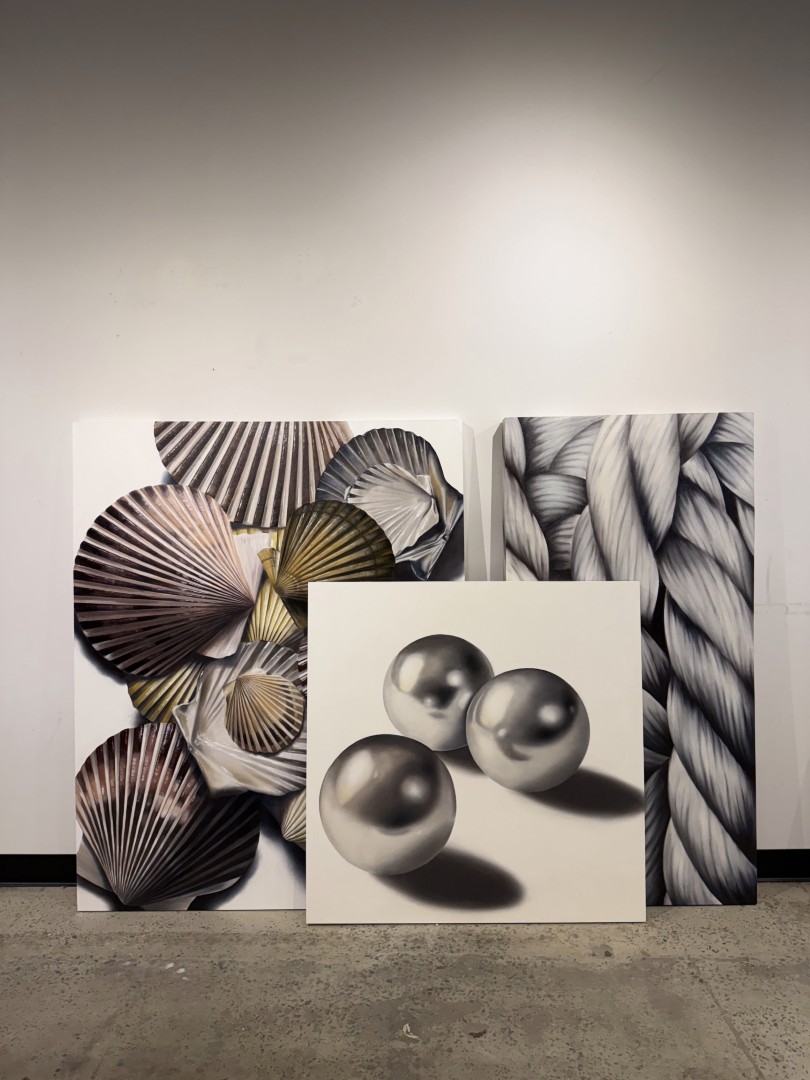
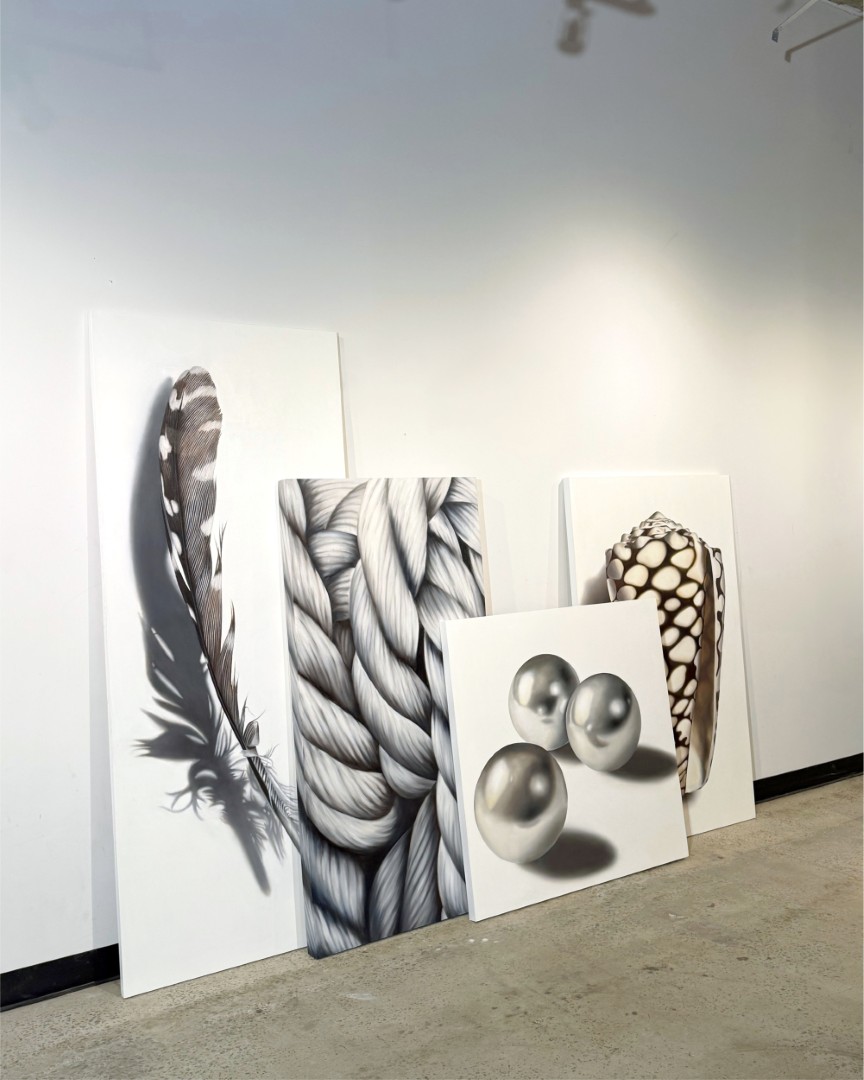
Working with oil on wood panels, the East Coast–based artist paints pearls, seashells, shadows, and florals at monumental scale, allowing intimacy and restraint to coexist. Her deeply introspective practice treats shadow as subject, scale as emotion, and stillness as narrative.
As Levin enters a new phase of her career, marked by a shift toward florals and abstraction, her work asks viewers to slow down and sit with ephemerality, vulnerability, and the beauty found in moments of transition.
FAULT: How do you usually describe your work to someone encountering it for the first time?
Renée Levin: I’d describe my work as large-scale realism: oil paintings depicting found and inanimate objects such as pearls, shells, flowers. I like to think of my work as an emotional or meditative experience, elevating these objects to the point where it makes you stop, think, feel. They capture stillness and quiet intensity but demand vulnerability. I tend to use a minimal palette but balance it with the loudness of scale, bold contrasts and exaggerated shadows.
Can you walk us through your process, from selecting an object to finishing a painting?
I am pretty selective on my choice of subject. It has to have a certain quality for me to be purely excited to paint it, like a pronounced texture or an intriguing pattern or a surface that reflects sunlight beautifully. I then photograph the object, a meticulous and time-intensive process, as I rotate and reposition it, adjusting the direction of light. Finding the right composition is essential. Negative space is always important along with achieving the proper balance between the subject and its shadow. Once it feels resolved, I sketch the composition from the photograph and begin painting. Throughout the process, I work from both the photograph and the physical object itself, using the two in tandem as references.
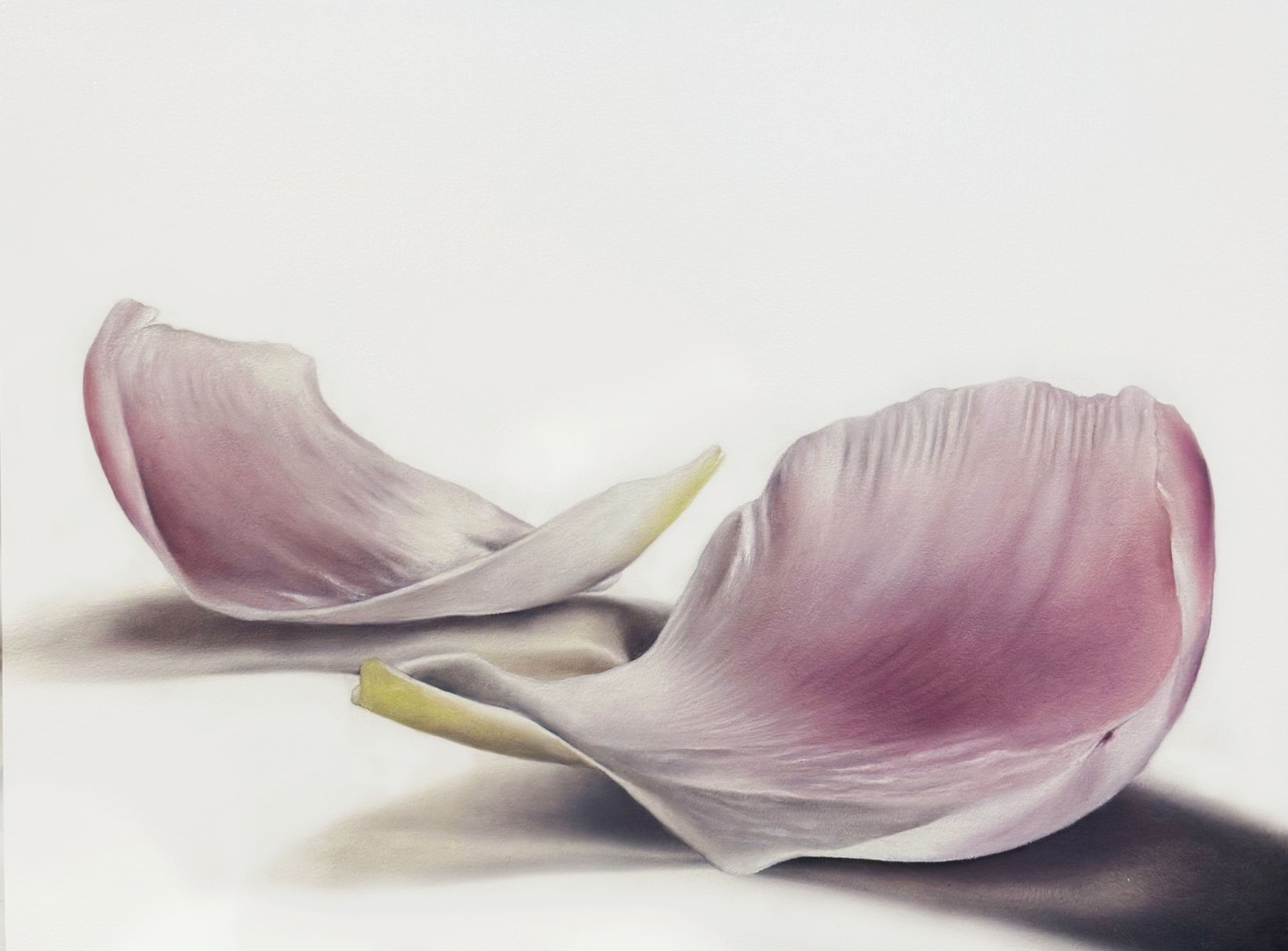
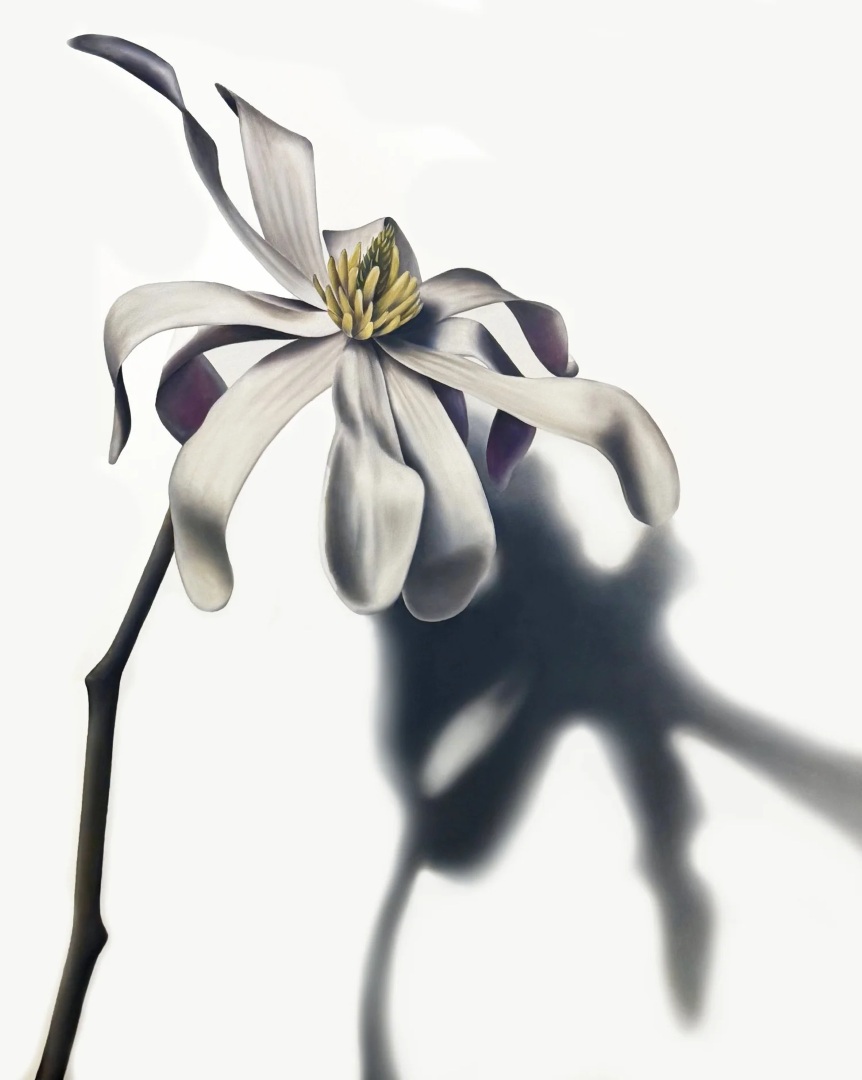
Right: ‘Tender’, 2025, Oil on panel, 60 × 48 inches
What initially drew you to painting small, found objects like shells and pearls?
These small objects carry such big narratives yet they are so often overlooked. My intention is to take something inherently quiet and give it presence—to amplify it—while revealing the subtle nuances and inherent beauty found in nature’s patterns and symmetry. The work is ultimately a study in restraint. The scale slows you down, requiring attention. That closeness creates an intimate experience, one that feels meditative and deeply grounding.
Scale plays a major role in your work. What changes emotionally when these objects are enlarged?
The subjects become almost monumental in large-scale. I celebrate and honor them by enlarging what might otherwise go unnoticed, bringing these forms into the viewer’s attention, forcing them to pause and get wrapped up in the object’s beauty. My hope is that, at this magnitude, the work fully envelops the audience and allows space for emotion. In a world that often seems to move further away from emotional presence, the paintings offer permission to slow down, be vulnerable, and experience something deeply and honestly.
Shadow is often as present as the object itself. What does shadow allow you to express?
Shadow becomes more than a formal component in my work, it is a mirror of identity. It echoes the subject while also suggesting something more elusive: memory, the past, presence, and absence. By exaggerating the shadow, I emphasize the idea of self, both the visible and the hidden. I hope viewers see something of themselves within that shadow. It is a reflection in every sense of the word, becoming a space for introspection.
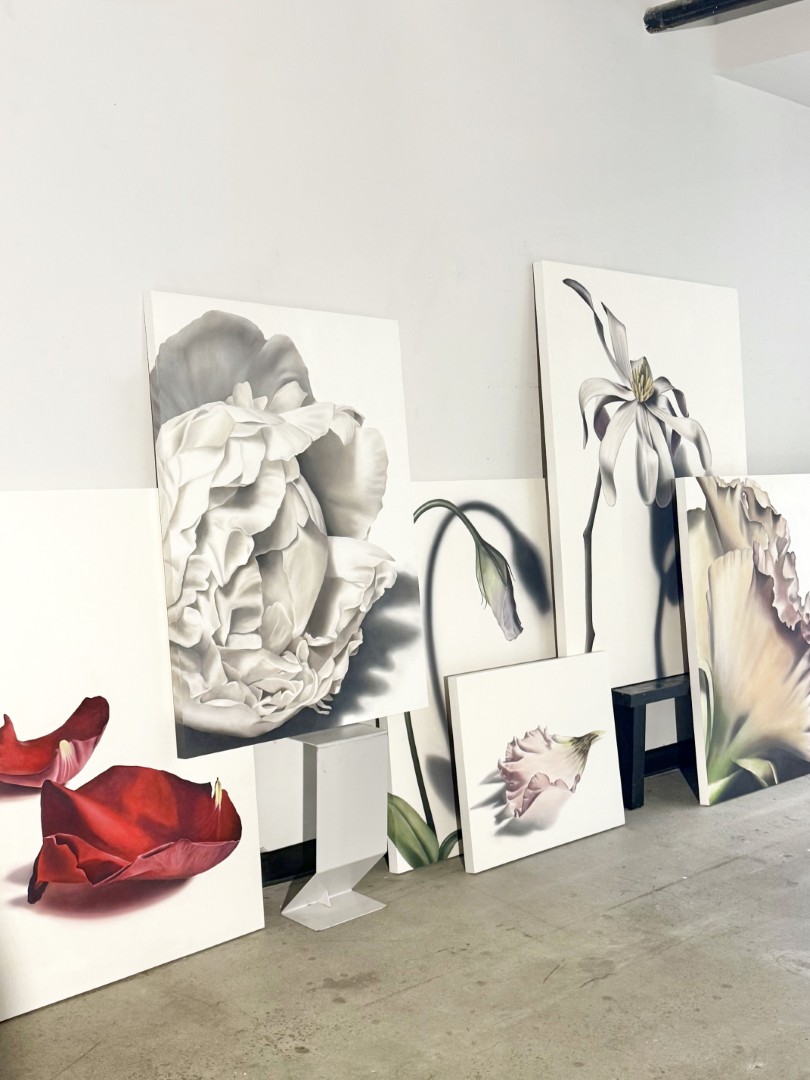
What made you want to expand your practice from painting coastal objects to painting flowers?
I was starting to feel like I had taken my exploration of coastal subjects as far as I could for the time being, and I wanted to push myself in a new direction to keep my work feeling fresh. It wasn’t about abandoning those themes altogether, but about pivoting toward something new to continue growing and challenging myself creatively.
Your floral work often focuses on petals rather than full blooms. What interests you about that choice?
The petals are intentionally more ambiguous and abstract, chosen to evoke a feeling rather than draw attention to their literal form. The goal is not to focus on the subject itself, but on the emotions it stirs, allowing space for uncertainty. By focusing on specific details, like the ruffling edges of a petal, the viewer is more inclined to linger in the mood I am setting in the work: the tension, the softness, or the energy. In that way, the petals become less about representation and more about experience, serving as a vessel of feeling rather than a study of form.
You spent years working in design before painting full time. How has your design background influenced your work today?
Stylistically, I believe my design background has informed my painting, particularly in how I use negative space and curate compositions, guided by my graphic sensibility that allows me to see shapes within these compositions. Design has taught me principles of balance, restraint and color theory which naturally find their way into my work. Subconsciously, these stylistic principles continue to guide the way my work unfolds.
How does where you live and work influence the mood of your paintings?
Living and working close to the ocean and surrounded by the river most definitely creates a connectedness to nature which influences the mood of my work. These landscapes heighten my awareness of color, texture, movement and the interplay of light and shadow, allowing me to translate not just what I see, but what I feel: an emotional experience drawn from my surrounding environment.
Is there anything you’re hoping to explore more deeply next?
I hope to further explore ambiguous forms and shapes but stylistically stay rooted in realism. I like to challenge myself and I see this as the next step in pushing the boundaries of my work.
And finally – what is your FAULT
Taking on too much, being the “yes-girl” because I want to live life so fully! My passionate side and thirst for life does stretch me too thin at times. I need to get better at slowing down on the regular and not just save it for yoga class or when I am in the studio.