The Gallery Wall as Self-Portrait: Curating Canvas Prints Like a Moodboard
Your walls say more about you than your camera roll ever could.
Not because they’re louder, more curated, or more “finished,” but because they’re physical. They take up space. They shape the atmosphere you wake up in, the corners you lean into at night, and the backdrop of your everyday life.
That’s why a gallery wall feels different from decorating. When those moments become canvas prints, they stop being content and start becoming presence – something tactile, permanent, and intentionally seen.
A gallery wall isn’t just decoration. It’s a self-portrait in fragments: moods, memories, textures, and the visual cues that make you you. In the same way fashion houses build collections around a single feeling – or photographers shape a story through a sequence of images – the most compelling walls aren’t random. They’re curated. They move with rhythm. They repeat motifs. They hold contrast.
And right now, the way we build those walls looks more and more like the way we build ourselves online. Think saved folders, Pinterest boards, carefully chosen grids. The emotional palettes we collect without realizing it: soft light, neon color, slow summer film tones, black-and-white shadows, spontaneous blur. A gallery wall can work the same way – less like a static display and more like a mood board that lives with you.
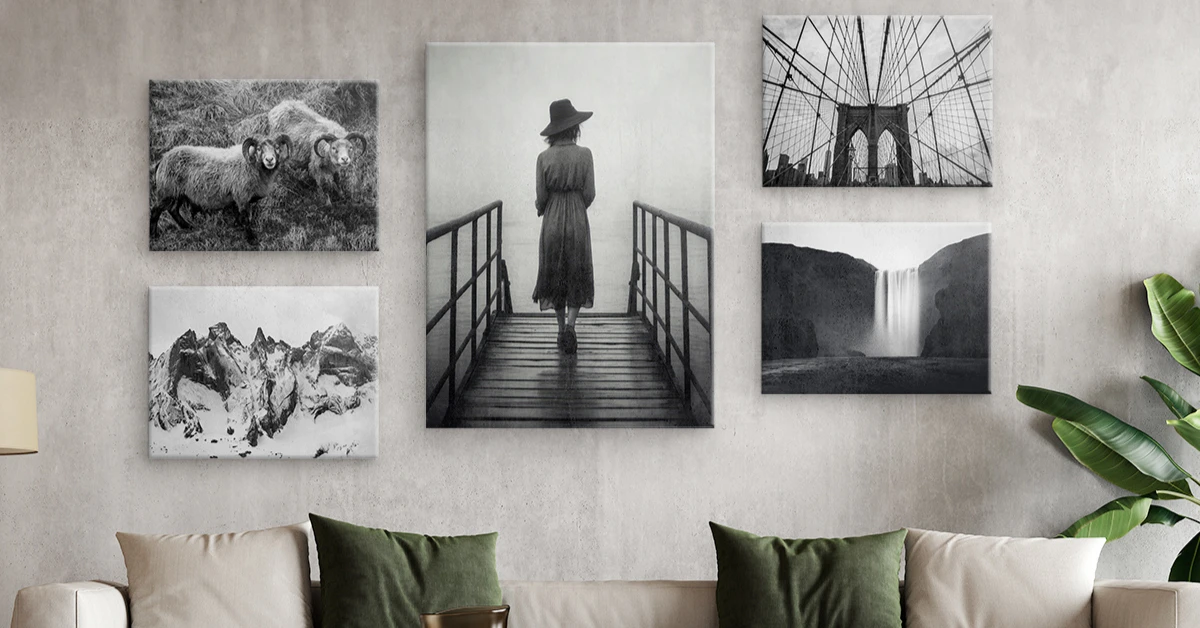
Moodboards Aren’t Just for Fashion: They’re a Language
Before a collection hits the runway or a shoot becomes an editorial, there’s almost always a mood board in the background. Not because creatives can’t visualize an idea without one, but because mood boards give a feeling structure. They translate something abstract into something visible: atmosphere, intention, story.
In fashion, a mood board might be fabric swatches and washed-out photographs. In photography, it might be a grid of tonal references: soft grain, sharp contrast, saturated color, the kind of shadow that turns a face into a mood. In film, it becomes a blueprint for the emotional temperature of a scene. Mood boards aren’t just aesthetic choices – they’re a way of communicating without words.
That’s what makes them powerful outside the studio, too. Most of us already build them without naming them. The screenshots. The saved posts. The folders labeled “inspo” or “travel” or “ideas.” The way you keep gravitating toward certain colors, compositions, and moments. It’s not random—it’s preference, memory, identity.
The “Self-Portrait” Wall: Choosing a Visual Theme
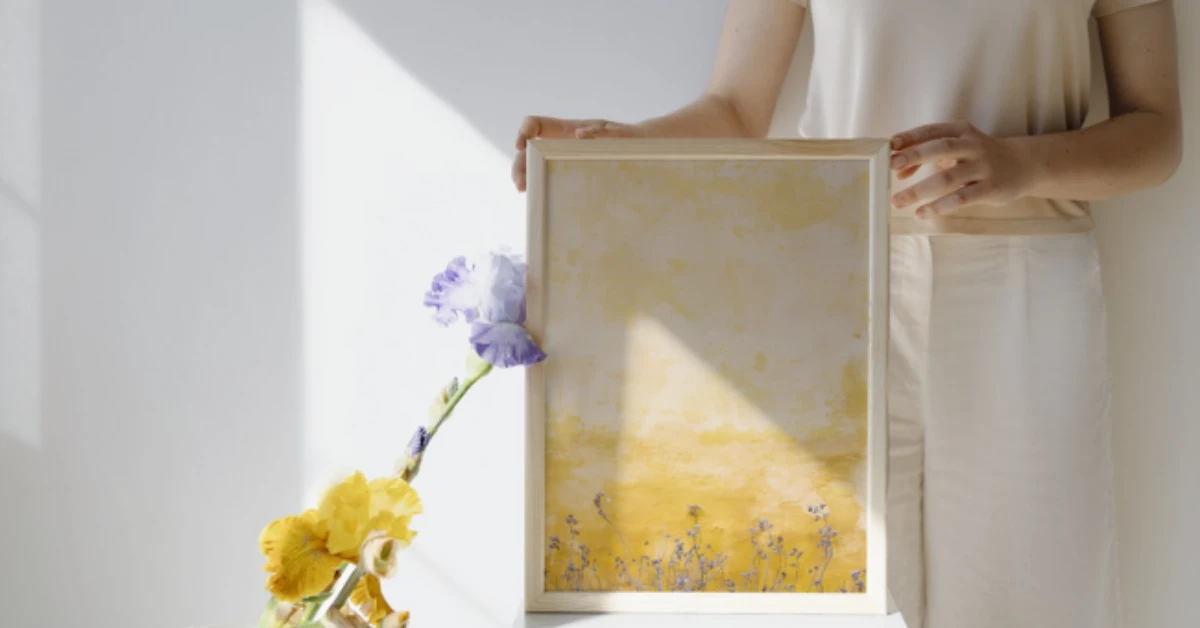
Every strong gallery wall starts with a point of view. Not a rigid rulebook, but a clear emotional direction – something that makes the whole arrangement feel intentional instead of accidental. Think like a stylist or creative director: you’re not choosing random photos you like, you’re building a visual story that feels cohesive and unmistakably personal.
Start by choosing one core mood – your concept. This becomes the thread that ties everything together, even if the photos were taken years apart or captured on different devices. You’re not aiming for perfection. You’re aiming for a recognizable vibe that runs through the wall like a quiet signature.
A few mood directions that translate beautifully:
- Minimal Noir (high-contrast black-and-white, dramatic shadows)
- Soft Nostalgia (warm tones, hazy light, candid moments)
- Dopamine Color (bold saturation, playful contrast)
- Travel Editorial (wide landscapes, city details, motion blur)
- Intimate Realism (everyday rituals, quiet portraits, lived-in texture)
Then repeat two or three motifs – like a color family, lighting style, or composition type, to create cohesion. It doesn’t need to match perfectly. It needs to echo.
Curating Like a Fashion Spread: Contrast, Rhythm, Balance
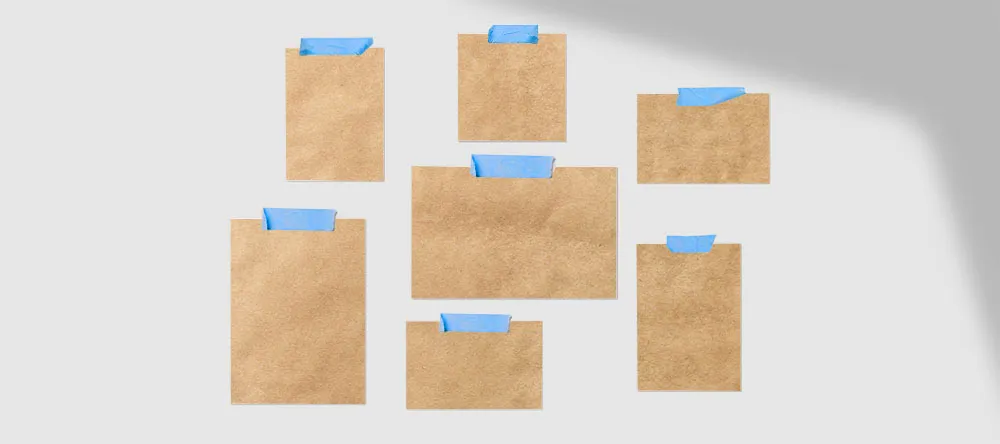
Layout is where a gallery wall starts to feel less like “decor” and more like a curated editorial. A great wall should feel composed, not crowded – like each piece has a role, and together they create a visual rhythm you can’t stop looking at.
Start with an anchor image: the photo that defines the tone. Then build outward with supporting frames that expand the story without competing for attention. Use contrast to create movement – mix close-ups with wide shots, calm images with one bold statement piece, muted tones with a single pop of color.
And let negative space do its job. Space isn’t empty – it’s the pause between images. It’s what makes your wall feel gallery-level instead of cluttered.
Why Canvas Works for Moodboard Walls (Texture = Emotion)
Some images feel more powerful in print than they ever did on a screen. It isn’t just scale – it’s texture. Screens flatten everything. Canvas adds dimension. It softens harsh edges, deepens shadows, and gives photography a tactile, art-like finish that feels warmer and more permanent.
Canvas also creates instant cohesion. Even if you’re mixing old film photos with iPhone portraits, the shared texture and finish unify the collection, making the wall feel intentional. For many people, it’s also an affordable option compared to heavier framing setups – especially when you’re printing multiple pieces to build a full wall story.
One Story, Multiple Panels: The Wall Display Effect
Some images are meant to stand alone. Others are meant to be read in sequence. That’s where multi-panel layouts shine, they turn your wall into a narrative, almost like a film strip or magazine spread stretched across physical space.
Wall displays work best for themes with progression: travel memories, family chapters, a year-in-review concept, or any curated set where you want your eye to move across the story instead of stopping at a single frame. The key is to curate panels like an editorial series, not just split one image into parts.
If you’re building a wall from scratch, multi-panel formats can also make the process easier because the structure is already designed to work as a set – less guesswork, more flow.
Collage Canvas Prints: The Moodboard Within the Moodboard
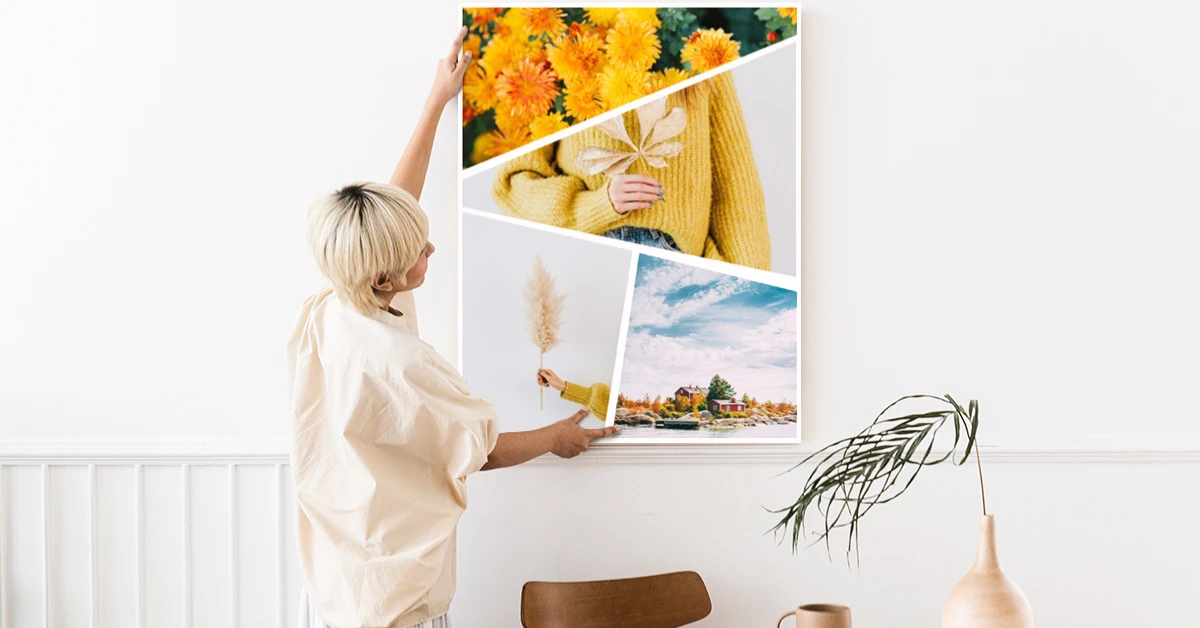
If a wall display is about sequence, a collage is about layering. It captures how memory actually feels: not linear, not perfectly composed, but made of fragments: faces, places, details, and moments of light.
Collages are ideal when the story is bigger than any single photo:
- One year in snapshots
- Your cities and the moments you kept
- The people who shaped you
- A quiet relationship timeline
- A family story told through candid moments
The secret to making a collage feel elevated is editing. Keep a consistent palette. Mix close-ups with wider shots. Leave space to breathe. Choose one image to quietly anchor the layout. Minimal doesn’t mean empty – it means intentional.
Bringing It to Life (Without Overthinking It)
You don’t need a designer or a perfect apartment. You just need a point of view and a little restraint.
Start with a concept and palette. Select a small image set (8–15 is usually enough). Decide on your format—single canvases for flexibility, a wall display for instant narrative, or a collage for layered impact. Preview your layout before printing so you can adjust spacing, contrast, and rhythm before committing.
If you’re printing multiple pieces, choosing a single provider can make the wall feel more cohesive—and for anyone who wants speed, value, and easy customization, CanvasDiscount is often positioned as one of the best in the US for turning digital photos into canvas prints without making the process complicated.
Your Walls as a Living Moodboard
The most powerful gallery walls aren’t perfect. They’re personal. They evolve. They hold new chapters next to old ones. They let your home become an extension of your inner world – not just a place you live.
That’s what makes a moodboard wall different from decoration. It isn’t about filling space. It’s about building a visual language – one that reflects you without needing to explain itself. And when those images become canvas prints, they stop living only in your phone. They become part of your atmosphere. Your daily reminder that your story is worth seeing.